
How to Spot Ear Infections in Pets
“`html

Ear infections represent one of the most frequent yet preventable sources of discomfort I encounter in clinical practice. In my years as a vet tech, I’ve seen this situation countless times where early owner vigilance could have spared a pet weeks of pain and expensive interventions. Whether the patient is a floppy-eared retriever or a dense-coated Persian, understanding the anatomy, recognizing behavioral red flags, and applying consistent training-based handling techniques makes all the difference.
Pet ears are structured with an outer, middle, and inner section, though the vast majority of infections stay confined to the outer ear canal. Dogs and cats share an L-shaped canal that readily traps moisture and debris, fostering bacterial, yeast, or mite proliferation. From a clinical standpoint, what owners miss here is the baseline comparison: healthy canals appear pale pink with minimal wax, while infection brings rapid shifts to redness, swelling, or exudate.
Dog breeds carrying long, pendulous pinnae—Cocker Spaniels, Basset Hounds, and Labrador Retrievers among them—face heightened risk because the flap restricts airflow and traps humidity after swimming or bathing. Regular visual checks for odor or discharge allow intervention before the canal narrows from chronic scarring. As a dog trainer, I routinely teach clients to desensitize puppies to ear handling through short, reward-based sessions so that adult examinations remain low-stress.
Cats generally maintain more erect ear conformation, yet Persians and Maine Coons with heavy internal fur still encounter problems, often secondary to allergies or upper respiratory disease. Dark, coffee-ground wax frequently signals mite involvement, especially in multi-cat homes. Owners who perform gentle weekly inspections with veterinary-approved solutions catch these changes before balance issues or head tilt develop.
Behavioral cues often precede dramatic physical signs. Excessive head shaking, pawing at the ears, or one-sided head tilting indicate canal irritation. Discharge may range from yellow purulent material to dark debris, accompanied by a noticeable odor. In dogs, swollen pinnae, crusting along the margins, and pain on palpation of the base are common; allergic breeds such as Bulldogs and Golden Retrievers frequently layer secondary infections atop primary skin disease. Cats mask discomfort more effectively, so reduced grooming around the head or avoidance of ear petting warrants attention. Hair loss from scratching and middle-ear involvement can follow if left unchecked.
Understanding the different types of ear infections helps owners recognize which may require urgent attention. Otitis externa, the most common form affecting the outer ear canal, typically develops gradually and responds well to topical treatments when caught early. Otitis media involves the middle ear and often stems from untreated outer ear infections; signs include head tilt, loss of balance, and nausea. Otitis interna, the innermost infection, represents the most serious form and can lead to permanent hearing loss or neurological complications if systemic antibiotics aren’t administered promptly. Recognizing which signs correspond to each level helps owners communicate effectively with their veterinarian and understand treatment urgency.
Underlying triggers include atopy, grass awns, excessive moisture, and endocrine disorders like hypothyroidism. Training routines that incorporate calm ear manipulation from puppyhood directly improve compliance during home checks and clinic visits. Humid environments simply amplify incidence across breeds. Seasonal patterns also play a role; many owners notice increased ear issues during summer months when humidity peaks and water exposure from swimming becomes routine. Fall and spring allergies, driven by pollen, can similarly trigger inflammatory responses that predispose ears to secondary infections.
The role of diet in ear health shouldn’t be overlooked. Pets with food sensitivities or allergies often manifest symptoms through chronic ear inflammation before other signs become apparent. Switching to limited-ingredient or hypoallergenic diets under veterinary guidance has resolved recurring infections in numerous cases I’ve encountered. Omega-3 fatty acid supplementation also supports skin barrier function and reduces overall inflammation, potentially decreasing infection frequency in susceptible individuals.
High-risk dogs—Spaniels, Poodles, and Shar-Peis—benefit from weekly veterinary wipes after water exposure. Rewarding relaxed behavior during these sessions, a technique I emphasize in training classes, builds lasting tolerance. Outdoor and multi-pet cats carry elevated mite transmission risk; keeping ears dry post-bath and maintaining monthly parasite prevention measurably lowers recurrence. Allergy testing remains valuable for chronic Siamese or similar sensitive lines.
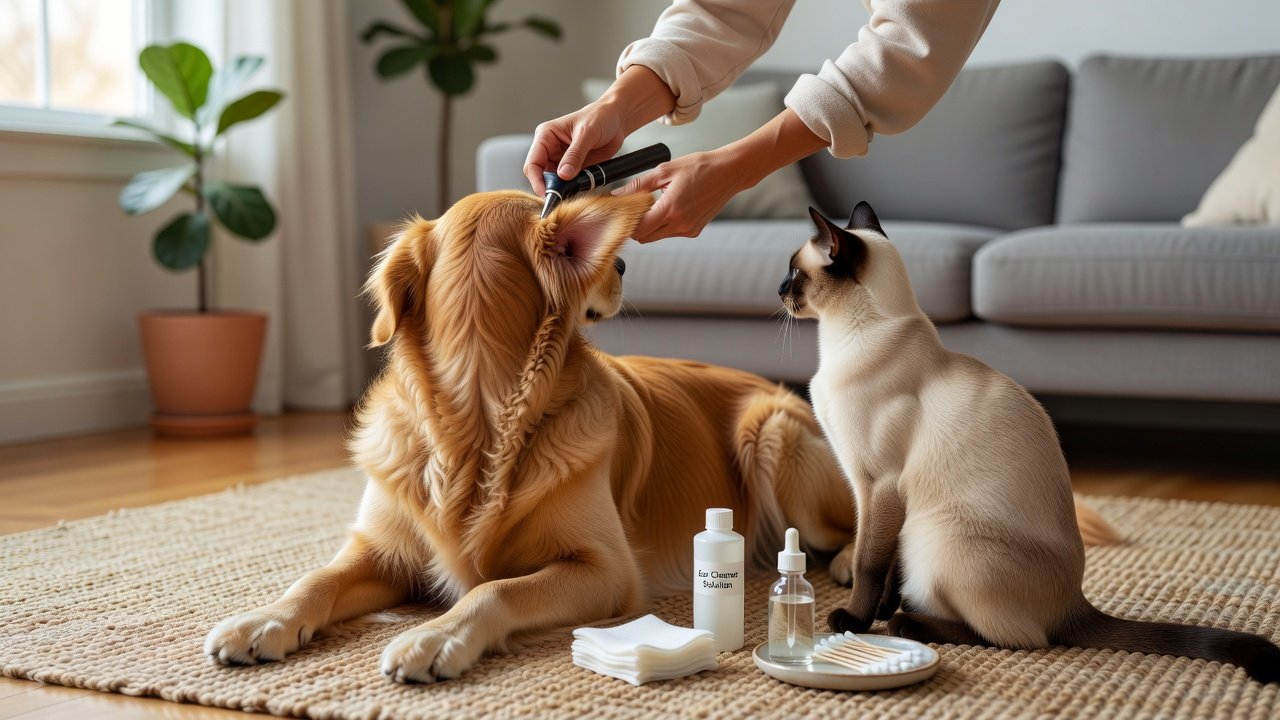
Proper ear cleaning technique deserves specific attention, as improper methods can worsen infections or damage delicate structures. Owners should never insert cotton swabs or pointed objects deep into the canal; instead, veterinary-approved ear cleaners applied with cotton balls or soft cloths allow gentle surface cleaning. The L-shaped anatomy means debris naturally migrates outward, and aggressive probing can push material deeper or rupture the tympanum. When cleaning at home, always use solutions specifically formulated for ears and follow your veterinarian’s recommendations regarding frequency. Some infections require professional cleaning under sedation to ensure thorough removal of infected material without causing pain or further damage.
The connection between allergies and ear infections cannot be overstated. Allergic inflammation weakens the skin barrier and alters the ear canal environment, creating conditions favorable for bacterial and yeast overgrowth. Many chronic cases involve a cycle where the initial allergen trigger causes inflammation, secondary infection develops, and the resulting irritation perpetuates the cycle. Breaking this pattern often requires addressing the underlying allergy through antihistamines, omega-3 supplementation, dietary modification, or immunotherapy rather than simply treating each infection as it arises.
Recognizing early warning signs allows owners to seek treatment before infections become painful or costly. A slight odor from the ear, minimal discharge on the ear flap, or a single episode of head shaking warrants a veterinary visit even if other symptoms haven’t developed. Many owners delay seeking care, assuming their pet will “get over it,” but this approach often results in the infection establishing deeply within the canal and potentially progressing to middle or inner ear involvement.
Key statistics underscore the scale: roughly 20 percent of dogs experience at least one ear infection lifetime, with certain breeds exceeding 50 percent. These cases drive nearly 7 million annual U.S. veterinary visits. Yeast accounts for over 60 percent of chronic canine infections, while mites contribute to up to 30 percent of feline cases. Pendulous-eared breeds are three times more likely to develop problems than erect-eared dogs. Early detection cuts treatment costs by about 40 percent and prevents permanent hearing loss. Allergic skin disease underlies 75 percent of recurrent infections in both species, and routine at-home checks identify 85 percent of cases before severe signs emerge.
Creating a home monitoring routine need not be complicated. Monthly ear checks using a flashlight and gentle handling build familiarity with what normal ears look like for your individual pet. Document any changes in color, odor, or discharge, and keep records to share with your veterinarian—patterns often emerge that help identify underlying causes. During grooming sessions, take a moment to inspect ear interiors and note whether your pet pulls away or seems sensitive. This baseline awareness transforms you into your pet’s first line of defense against infections.
Consistent observation paired with breed-aware prevention and professional evaluation when symptoms arise keeps dogs and cats comfortable long-term.
Sources
- American Kennel Club (AKC) – Expert advice on ear infections in dogs
- ASPCA – Dog ear infection prevention and care tips
- VCA Animal Hospitals – Comprehensive guide to ear infections in dogs
- PetMD – Symptoms, causes, and treatment of dog ear infections
- Recognizing and Treating Ear Infections in Cats
- Bug Bag Tips Every Pet Owner Needs for Outdoor Fun
- Pictures of Bed Bug Bites: What Every Pet Owner Should Recognize
Related Posts