
Mythical Animals: Legendary Creatures Explained
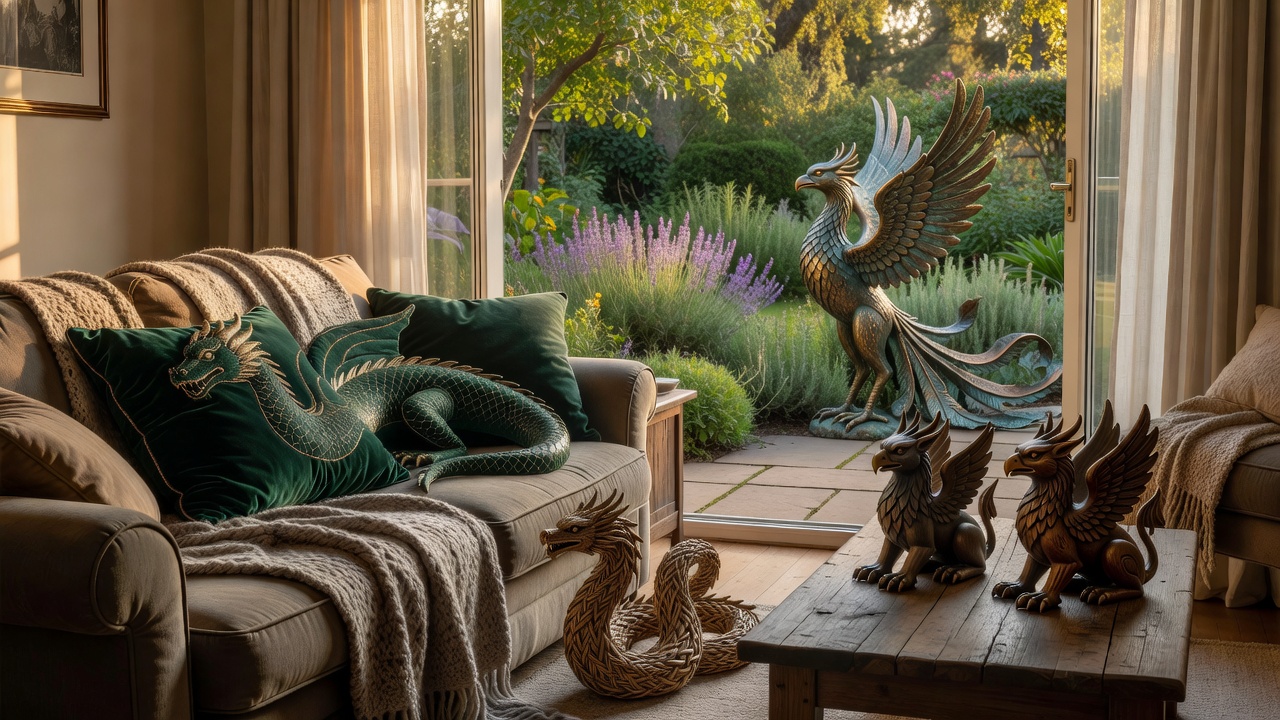
Long before zoologists started cataloguing species, storytellers around the world were busy inventing their own. Mythical animals have prowled through folklore, religious texts, and campfire tales for thousands of years, blending real animal traits into something entirely new. Some were born from fear of the unknown, others from a desire to explain natural events, and a few probably started as exaggerated sailor stories about actual animals. Whatever their origin, these legendary beasts still show up in books, movies, and tattoos today, proving that our fascination with them hasn’t faded one bit.
This piece looks at where some of the most famous mythical animals came from, why they stuck around in human culture for so long, and how a few of them might have been inspired by real creatures roaming the earth right now.
Why Mythical Animals Have Stuck Around for Centuries
Every culture on the planet has its own cast of imaginary creatures, and that’s not a coincidence. Humans have always tried to make sense of the natural world, and when something couldn’t be explained — a strange fossil, an eclipse, a deadly storm — a story about a monster or magical beast often filled the gap. According to the Encyclopaedia Britannica, mythological creatures frequently combined features of multiple real animals to represent power, danger, or divine forces that people couldn’t otherwise put into words.
There’s also a simpler reason these stories survived: they’re just really good stories. A dragon guarding treasure or a phoenix rising from ashes taps into universal ideas about greed, rebirth, and courage. Those themes don’t expire, which is why kids today still light up at the mention of a griffin or a kraken.
Legendary Land Creatures That Shaped Folklore
Land-based mythical animals tend to reflect the fears and values of the people who created them. Many were used as warnings, guardians, or symbols of strength.
Dragons
Dragons appear in nearly every culture, though their personalities vary wildly. European dragons are usually fire-breathing villains hoarding gold, while Chinese dragons are wise, benevolent symbols of power and good fortune, closely tied to water and weather. The sheer spread of dragon mythology across unconnected civilizations has led some historians to wonder if dinosaur fossils played a role in inspiring early dragon legends.
Unicorns
The unicorn started as a fairly ordinary description of a single-horned animal in ancient Greek natural history writings, likely based on secondhand accounts of rhinoceroses or oryx. Over time it morphed into the elegant, magical horse-like creature we picture today, often associated with purity and healing.
Werewolves
Stories of humans transforming into wolves show up across European folklore and were sometimes used to explain unusual behavior, illness, or even serial crimes in medieval communities. The werewolf myth taps into a very old fear: that the line between civilized human and wild animal is thinner than we’d like to believe.
Sea Monsters and Water-Dwelling Mythical Animals
The ocean has always been one of the biggest sources of mystery, so it makes sense that it produced some of the most terrifying mythical animals.
- Kraken: A massive sea monster from Scandinavian folklore, often described as large enough to be mistaken for an island, said to drag entire ships underwater.
- Mermaids: Half-human, half-fish beings found in maritime legends worldwide, sometimes helpful, sometimes dangerous to sailors.
- Sea serpents: Giant snake-like creatures reported by sailors for centuries, possibly inspired by real animals like oarfish, which can grow over 30 feet long and are rarely seen alive.
The kraken legend in particular may have roots in real biology. Giant squid, which can reach lengths of over 40 feet, were essentially unknown to science until the 1800s, and encounters with their remains likely fueled centuries of sea monster stories, as noted by the Smithsonian Ocean initiative.
Mythical Animals Inspired by Real Creatures
A lot of legendary beasts aren’t pure invention — they’re exaggerations or misunderstandings of animals that actually exist.
The Kraken and the Giant Squid
As mentioned above, real deep-sea giants likely inspired kraken tales long before modern marine biology confirmed they existed.
The Basilisk and Real Reptiles
The basilisk, a legendary serpent said to kill with a single glance, may have been inspired by exaggerated reports of venomous snakes like cobras, whose deadly bite and intimidating hood made them seem almost supernatural to people unfamiliar with them.
The Roc and Giant Birds
Stories of the Roc, an enormous bird capable of carrying off elephants, may trace back to encounters with real giant birds like the now-extinct elephant bird of Madagascar, which laid eggs larger than any known dinosaur egg, according to London’s Natural History Museum.
What Mythical Animals Tell Us About Real Ones
Looking at mythical animals isn’t just fun trivia — it’s a window into how humans have always related to wildlife. Fear, respect, curiosity, and admiration all show up in these old stories, the same emotions that drive modern conservation and animal science today. The griffin’s mix of eagle and lion, the phoenix’s endless rebirth, the loyal guidance of a fox spirit — these characters borrow real animal behaviors and stretch them into something bigger than life.
Whether you love dragons for their fire-breathing drama or unicorns for their gentle magic, mythical animals remind us that the natural world has always been a source of wonder worth protecting, imagining, and celebrating.