
Easy Animals to Draw: A Beginner’s Step-by-Step Guide
Grabbing a pencil and sketching an animal sounds intimidating until you realize most creatures break down into simple shapes: circles, ovals, and a few curved lines. If you’re hunting for easy animals to draw, you’re in the right place. Whether you’re a parent looking for a rainy-day activity with the kids, a pet owner who wants to capture their dog’s silly face, or just someone rediscovering the joy of doodling, this list will get your pencil moving without the frustration.
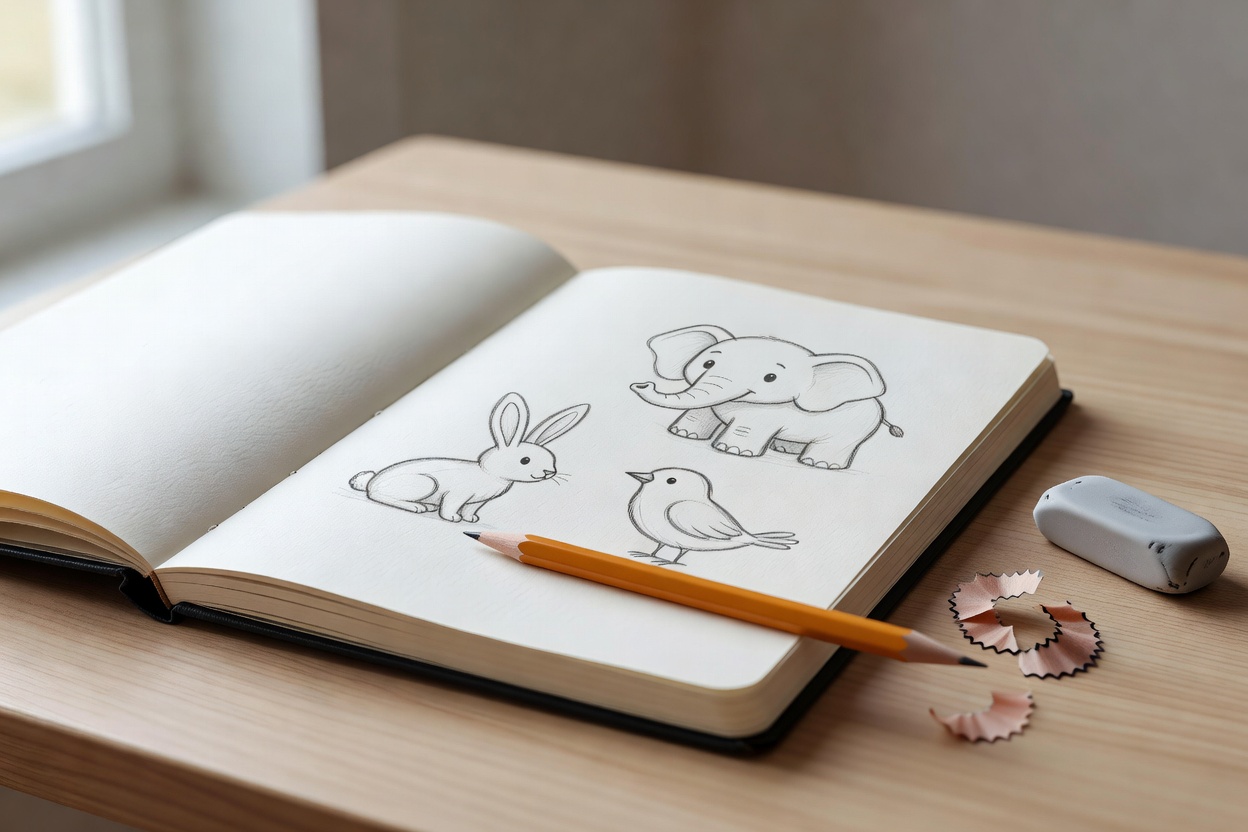
The trick isn’t talent — it’s starting with animals whose bodies lend themselves to basic geometry. Below, we’ve rounded up beginner-friendly animals, broken down step by step, plus a few tips that actually make a difference once you start drawing regularly.
Why Some Animals Are Easier to Draw Than Others
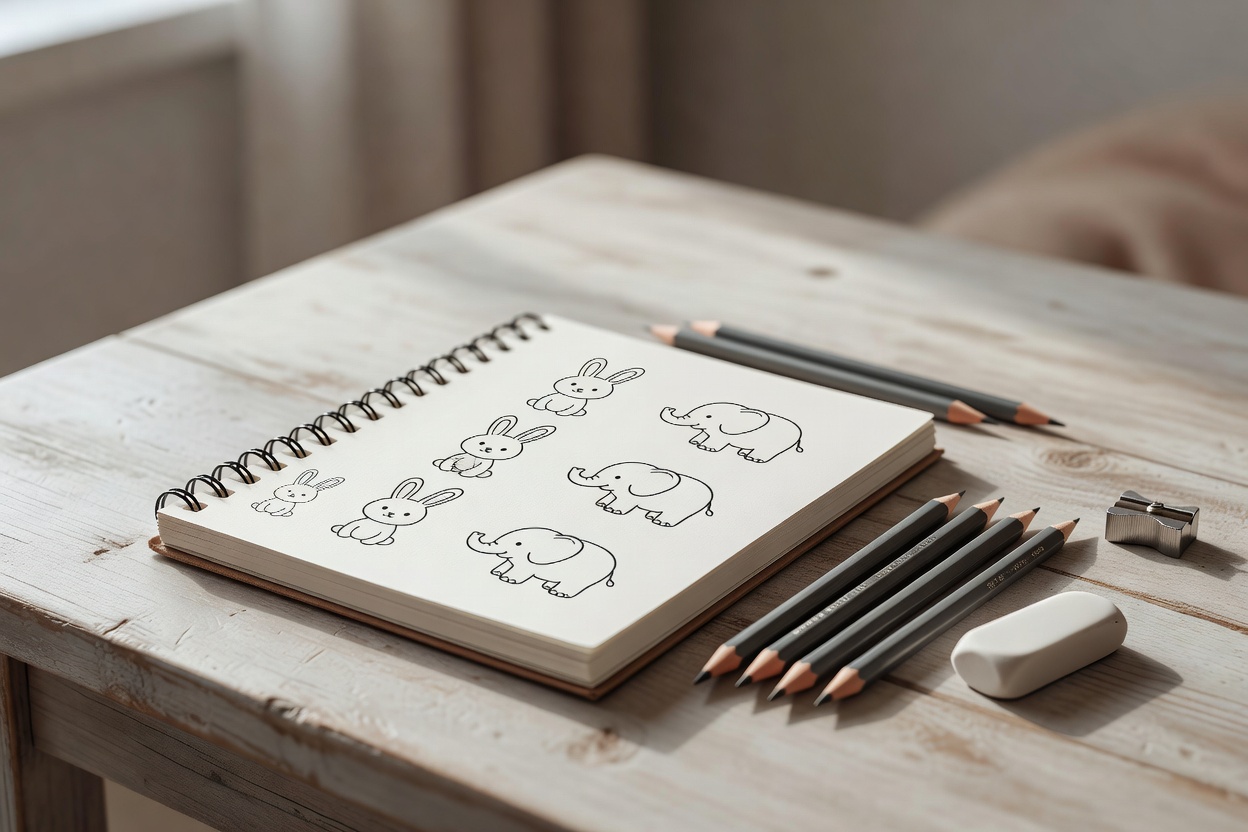
Animals with rounded bodies, minimal fur detail, and simple facial features are naturally easier to sketch than, say, a galloping horse or a detailed tiger. According to illustrators at the ArtStation community, beginners progress faster when they practice on subjects with clear, repeatable shapes rather than jumping straight into complex anatomy. That’s exactly why cartoon-style animals dominate so many “learn to draw” books — they strip away the intimidating details and leave you with confidence-building basics.
The Building-Block Method
Most drawing instructors, including those referenced by the Museum of Modern Art’s education resources, teach a “shapes first” approach: sketch circles and ovals for the body and head, then add limbs, features, and texture last. This method works beautifully for animals because so many of them are essentially blobs with legs.
10 Easy Animals to Draw for Beginners
Here’s a practical list of easy animals to draw, ranging from farmyard favorites to backyard wildlife. Start with whichever one excites you most — motivation matters more than order.
- Owl – A single oval body, two big circles for eyes, and a small triangle beak. Add some V-shaped feather lines and you’re done.
- Fish – One oval, a triangle tail, and a curved line or two for gills. Add stripes or spots for personality.
- Turtle – A dome shell (half-circle), a small oval head, and four stubby leg shapes. The shell pattern is just a fun grid of hexagons.
- Snail – A spiral shell and a simple curved body. There’s no faster win for beginners than a snail.
- Cat – Round head, triangle ears, oval body, and a curved tail. Whiskers and a small nose finish the look.
- Bird (perched sparrow style) – Oval body, round head, small beak triangle, and simple wing lines.
- Pig – A rounded rectangle body, snout circle, and two triangle ears. Add small dot nostrils for character.
- Bunny – Oval body, round head, two long ears, and a puffball tail.
- Elephant – Believe it or not, elephants are simple in cartoon form: a big oval body, a trunk curve, and two large ear shapes.
- Ladybug – A dome shape, a line down the middle, and a handful of dots. Kids especially love this one.
Step-by-Step: Drawing a Simple Cat
Since cats are one of the most requested easy animals to draw, here’s a quick walkthrough anyone can follow:
- Draw a circle for the head and an oval below it for the body.
- Add two triangle ears on top of the head circle.
- Sketch two oval eyes, a small triangle nose, and a few whisker lines.
- Draw four short legs and a curved tail extending from the body.
- Add fur texture only if you want — a plain outline looks great too.
Once you’ve nailed this basic cat, you can adjust ear shape, tail curve, and eye size to draw kittens, foxes, or even bobcats using the same skeleton.
Tools That Make Drawing Animals Easier
You don’t need fancy supplies to start. A basic pencil, an eraser, and printer paper work fine. That said, a few tools speed up the learning curve:
- Mechanical pencils – consistent line weight without sharpening breaks.
- Kneaded erasers – great for lightening lines without smudging.
- Reference photos – sites like Unsplash offer free, high-quality animal photography that helps you understand proportions before simplifying them into cartoon shapes.
- Grid paper – useful for keeping symmetry in early practice sketches.
Practicing With Real Pets
If you have a dog, cat, or rabbit at home, they make excellent (if wiggly) drawing subjects. Start with photos rather than live movement — the ASPCA and other animal welfare organizations often publish free stock photography of pets that’s perfect for practice sketching without needing your own model to sit still.
Tips for Staying Motivated
Learning to draw animals is a skill that builds gradually, and a few small habits make a real difference:
- Draw the same animal five times in a row — you’ll notice quick improvement by attempt three or four.
- Don’t erase every mistake immediately. Sometimes a “wrong” line becomes part of the final design.
- Set a timer for 10 minutes. Short, frequent sessions beat long, frustrating ones.
- Compare your work to your own past sketches, not to professional illustrators.
Final Thoughts on Getting Started
Every skilled illustrator started with wobbly circles and crooked triangles. The animals on this list exist because they forgive imperfection — a slightly lopsided owl still looks like an owl, and a snail with a wonky spiral is still undeniably a snail. Pick one from this list, sketch it a few times today, and you’ll already be building the visual vocabulary needed to tackle trickier animals down the road.