
Facts About the Playful Personality of Bengal Cats
“`html
Bengal cats carry a wonderfully spirited energy that lights up any home they join, their love of play setting them apart while building those deep, trusting bonds we all cherish with our feline companions. These lively cats often remind me of the rescue journeys so many of us take—bringing home an animal full of untapped curiosity and watching their personality bloom through daily interaction and patience. What every pet owner who’s adopted knows is that matching an active soul with the right enrichment turns potential chaos into pure joy and connection.
Their heritage traces back to the Asian leopard cat, giving them that adventurous spark that keeps them moving, climbing, and exploring throughout the day. My rescue cats have taught me that this kind of drive isn’t about mischief; it’s an invitation to engage, whether through puzzle feeders or high perches that let them survey their world like the clever hunters they are. Early positive experiences help channel all that intelligence into games that strengthen the human-cat relationship, something rescue advocates see time and again when families commit to understanding each animal’s unique needs.
Even in the coziest living rooms, those ancestral instincts shine through as Bengals stalk toys or chase feather wands with impressive focus and stamina. Providing cat trees, window views, and rotating playthings prevents boredom and supports their natural urge to move—much like the environmental tweaks that help any adopted cat settle happily. Many Bengals also show a special fondness for water, dipping paws under faucets or even joining in shower time, turning everyday moments into shared adventures that deepen the emotional tie.
Daily routines with these cats often include inventive games, vocal chirps during long fetch sessions, and a tendency to follow their people from room to room, dropping toys as clear requests for attention. Rescue culture teaches us that variety keeps minds sharp, so switching up toys helps manage that boundless energy and supports their muscular health while reducing nighttime zoomies. Studies and breed observations note they rank among the most active felines, often seeking play multiple times a day, and many thrive with water-based enrichment.
Understanding the Bengal cat’s unique personality requires looking beyond their striking spotted or marbled coat patterns. These cats possess a remarkable intelligence that rivals many dog breeds, making them capable of learning commands, responding to their names with enthusiasm, and even opening doors or drawers if given the opportunity. Their cognitive abilities mean they require mental stimulation just as much as physical exercise. Without adequate enrichment, a bored Bengal may resort to destructive behaviors like chewing on plants, unraveling toilet paper, or attempting to escape through windows. This isn’t a sign of a “bad” cat—it’s simply their way of communicating that they need more engagement and challenge in their environment.
The social nature of Bengal cats deserves special attention, as they tend to be more dog-like in their attachment styles compared to other cat breeds. Many Bengal owners report that their cats greet them at the door like puppies, follow them from room to room throughout the day, and actively seek out lap time and physical affection. However, this social orientation means they don’t fare well in homes where they’ll be left alone for extended periods. Bengals thrive in households where family members are present and interactive, or in multi-pet homes where they have other animals to bond with and play alongside.
Vocal communication is another distinctive trait of Bengal cats. They are far more talkative than many other breeds, using a diverse range of sounds to express their needs and desires. From chirps and trills to meows and even growls during play, these cats constantly “talk” to their humans. Some owners describe their Bengals as chatty companions who provide a running commentary throughout the day. This vocalization is perfectly normal and reflects their engaged, interactive nature rather than any behavioral issue.
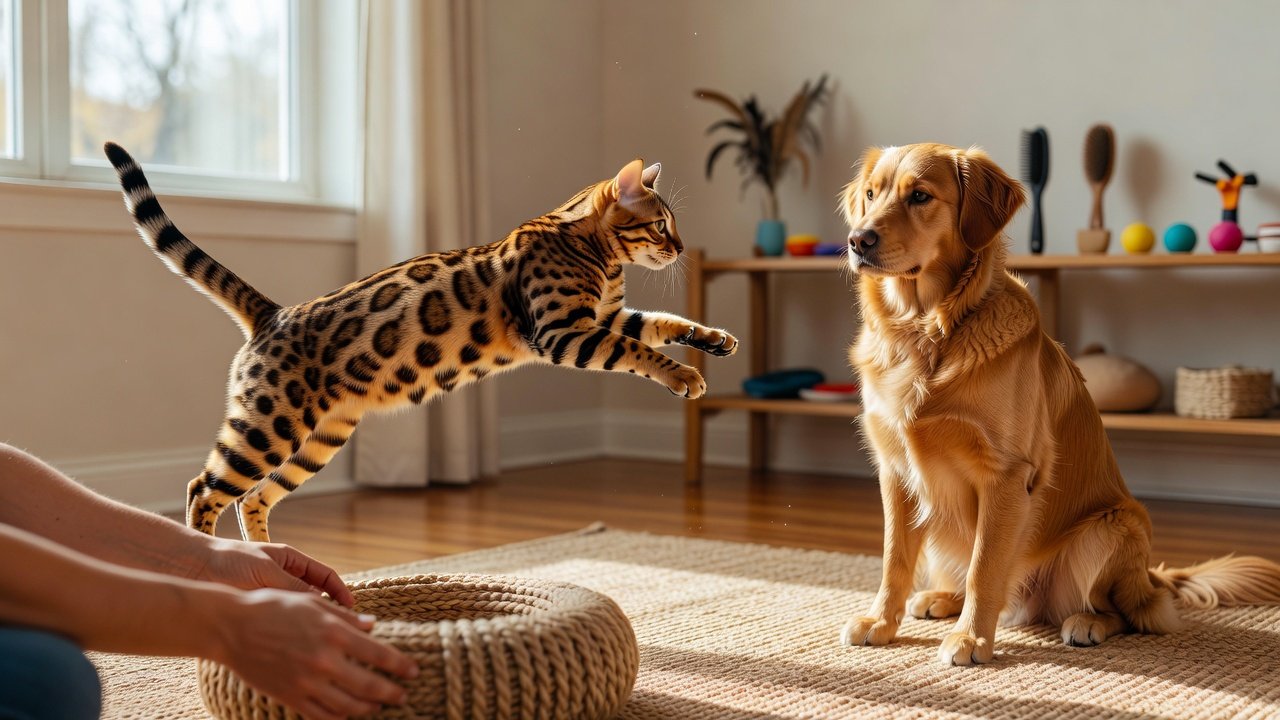
To meet their needs, thoughtful owners turn to puzzle toys, interactive wands, clicker training, and even supervised harness walks that build trust and keep agile bodies happy. Multi-cat homes benefit from vertical spaces and separate play zones, while consistent feeding and exercise routines promote long-term well-being. Reports show success with homemade obstacle courses or gentle dog playdates, always balanced with attention to safety. Creating a Bengal-friendly home environment might include installing cat shelves along walls, providing window perches for bird watching, and dedicating space for climbing and jumping activities that let them exercise their natural athleticism.
Training a Bengal cat opens up possibilities that many people don’t associate with feline companions. Because of their intelligence and food motivation, Bengals respond remarkably well to clicker training methods. Many owners successfully teach their cats to sit, high-five, come when called, and even walk on a harness and leash. These training sessions provide excellent mental stimulation and can be bonding experiences for cat and owner. Starting training early and keeping sessions short—typically 5-10 minutes—yields the best results, as Bengals have the attention span and desire to succeed when properly motivated.
The play style of Bengal cats often involves interactive engagement with their humans rather than solitary play. While they’ll entertain themselves with toys to some extent, they far prefer games where you’re an active participant. Feather wands, laser pointers, and ball toys are popular choices, but the key is regular interaction. Establishing a consistent playtime schedule—perhaps 15-20 minute sessions in the morning and evening—helps burn off excess energy and strengthens your bond. Many owners find that dedicated play sessions also improve their Bengal’s behavior throughout the rest of the day, as a tired Bengal is generally a well-behaved Bengal.
Considering a Bengal cat’s needs before bringing one home is crucial for both the cat and the family. These are not low-maintenance pets, nor are they ideal for first-time cat owners or families with limited time. However, for people prepared to commit to their interactive nature and activity requirements, Bengal cats offer unmatched companionship, entertainment, and affection. They’re the kind of cats that truly become family members, present in your daily life and invested in your well-being just as much as you’re invested in theirs.
Key details include their typical requirement of 30-60 minutes of daily interactive play, ranking in the top five most active breeds, with over 70% of owners noting greater happiness from water toys; their lifespan often reaches 12-16 years with proper mental stimulation, and they can master over 20 tricks while using vertical space far more than many other cats.
Embracing this playful side creates lasting family bonds filled with laughter and shared discovery. Whether through rescue adoptions or thoughtful placements, meeting these cats’ needs with love and creativity ensures they grow into cherished companions who bring endless affection and entertainment for years to come.
Sources
“`