
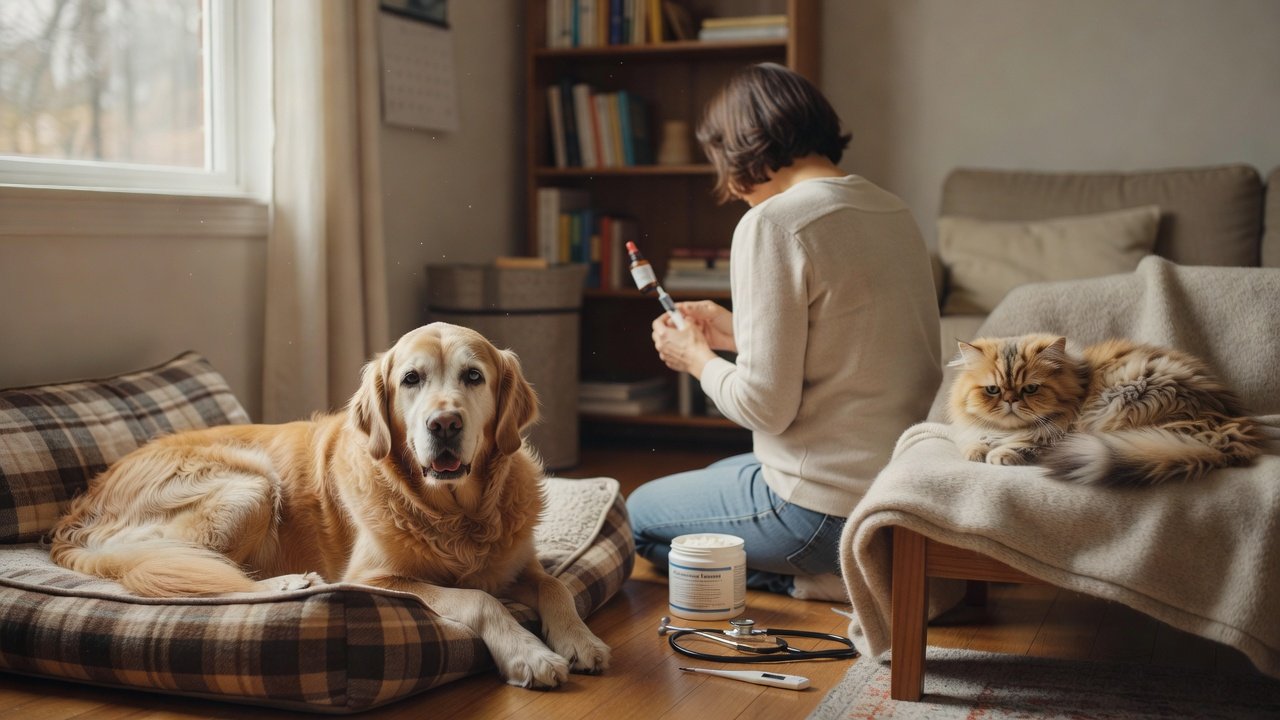
Common Health Issues Affecting Senior Dogs Today
“`html

As dogs live longer thanks to improved nutrition and veterinary advancements, we’re encountering more cases of age-related conditions in the exam room. From a clinical standpoint, what owners miss here is how regular wellness checks combined with daily observation can shift outcomes dramatically for these patients.
In my years as a vet tech, I’ve seen this situation countless times with larger breeds like Labs and German Shepherds developing arthritis as cartilage breaks down, causing stiffness, inflammation, and reduced mobility that shows up first as hesitation on stairs or reluctance to play. Excess weight speeds this process, along with genetics and prior injuries, while slippery surfaces at home often compound the issue. Management typically involves glucosamine and chondroitin supplements paired with anti-inflammatories, low-impact swimming for muscle maintenance, and portion-controlled diets high in omega-3s. Physical therapy sessions frequently restore range of motion and cut down on long-term medication needs.
The progression of arthritis in senior dogs deserves deeper attention because early intervention truly matters. Many owners attribute their dog’s slower movements to normal aging, missing the window when conservative treatments prove most effective. Joint supplements work best when started before significant cartilage loss occurs, which is why vets recommend them for large breeds around age five or six. Additionally, maintaining proper body condition cannot be overstated—even a five-pound reduction in an overweight senior dog can meaningfully improve mobility and reduce joint stress. Some owners find success with therapeutic laser treatments that reduce inflammation and promote healing at the cellular level, offering an alternative or complement to medication.
Heart conditions such as mitral valve disease and dilated cardiomyopathy rank high among senior presentations, often progressing quietly until coughing at night, rapid breathing, or exercise intolerance appears. Small breeds like Cavalier King Charles Spaniels carry elevated risk. Annual echocardiograms catch issues early, and drugs like pimobendan extend quality time. Fluid accumulation in the lungs is a common complication, so tracking resting respiratory rates at home gives owners a practical monitoring tool I’ve recommended repeatedly.
Understanding the specific mechanisms behind canine heart disease helps owners recognize subtle warning signs before emergencies develop. Mitral valve disease, which accounts for roughly 75 percent of heart disease in dogs, occurs when the valve between the left atrium and left ventricle degenerates and allows blood to leak backward. This forces the heart to work harder, eventually leading to enlarged chambers and reduced pumping efficiency. The coughing that develops is often worse at night or when the dog first wakes up, as fluid redistributes in the lungs when lying down. Owners should also watch for exercise intolerance—a dog that previously enjoyed long walks but now tires quickly warrants immediate veterinary evaluation. Dilated cardiomyopathy, more common in larger breeds, involves the heart chambers enlarging while the walls thin, reducing the organ’s ability to pump effectively. This condition often progresses more rapidly than valve disease, making early detection through screening echocardiograms particularly valuable for at-risk breeds.
Cancer incidence climbs sharply after age seven, with lymphoma, mast cell tumors, and osteosarcoma among the frequent diagnoses. Unexplained lumps, weight loss, or appetite shifts call for prompt bloodwork and exams. Treatments range from surgery to targeted therapies that spare patients the harshest side effects. Spaying or neutering at appropriate ages, balanced diets without heavy processing, toxin avoidance, and routine dental cleanings all lower systemic inflammation that can feed tumor growth.
The relationship between oral health and cancer risk deserves emphasis in senior dog care. Chronic dental disease creates persistent inflammation in the mouth that can spread systemically, potentially promoting tumor development. Moreover, bacteria from infected teeth can enter the bloodstream and affect organ function, complicating existing heart or kidney issues. Senior dogs benefit tremendously from regular professional dental cleanings, though anesthesia protocols for older dogs require careful assessment. Pre-operative bloodwork and cardiac screening help vets determine safe anesthesia dosing, while shortened procedure times minimize risks. At home, owners can support dental health through water additives, enzymatic toothpaste, and appropriate chewing materials that help keep tartar at bay.
Additional concerns like chronic kidney disease, canine cognitive dysfunction, and vision loss often overlap with the above. Renal diets and fluid therapy support kidney cases, while disorientation or sleep changes point to cognitive issues. Antioxidant support or surgery manages some cataracts.
Chronic kidney disease deserves particular attention as it affects up to one in three senior dogs and often progresses silently until significant kidney function is already lost. Early signs include increased water consumption and more frequent urination, changes owners sometimes attribute to behavioral shifts rather than medical issues. Prescription kidney diets restrict protein to reduce metabolic waste that failing kidneys struggle to filter, though the philosophy around protein restriction continues to evolve among veterinary nutritionists. Phosphorus and sodium control becomes increasingly important as kidney disease advances. Some dogs benefit from subcutaneous fluid therapy administered at home, which helps flush the kidneys and manage electrolytes. Regular monitoring through bloodwork tracking creatinine and blood urea nitrogen levels guides treatment adjustments.
Canine cognitive dysfunction, similar to canine dementia, manifests as disorientation, disrupted sleep-wake cycles, house-training accidents, and reduced interest in interaction. Owners often feel heartbroken witnessing these changes, but certain interventions help. Environmental enrichment, consistent routines, and puzzle toys engage the brain. Medication containing propentofylline improves blood flow to the brain, while supplements like S-adenosylmethionine and vitamin E provide antioxidant support. Many behaviorists recommend keeping lights on during evening hours and maintaining regular bathroom schedules to minimize confusion and accidents.
Vision loss through cataracts or progressive retinal atrophy is common in seniors, yet most dogs adapt remarkably well to gradual vision decline. Keeping furniture in consistent locations, using nightlights, and avoiding sudden changes to the home layout helps dogs navigate safely. While some cataracts warrant surgical removal, others progress slowly enough that surgery isn’t medically necessary. Only a veterinary ophthalmologist can determine if a particular cataract affects quality of life sufficiently to justify anesthesia in a senior patient.
Key facts remain consistent across studies: roughly 80 percent of dogs over eight show arthritis signs, heart disease hits up to 10 percent of seniors with small breeds at higher risk, cancer causes nearly half of deaths past age ten, wellness exams detect 60 percent of issues before symptoms, obesity raises arthritis odds by 40 percent, and dental disease affects over 85 percent by age seven while contributing to broader inflammation.
The importance of establishing a strong relationship with your veterinarian during your dog’s senior years cannot be overstated. Vets who see your dog regularly develop baseline knowledge of individual quirks and changes, making subtle health shifts more apparent. Twice-yearly wellness exams for dogs over seven years old catch emerging problems earlier than annual visits, when conditions may progress significantly between appointments. These exams should include thorough physical palpation, bloodwork screening organ function, urinalysis, and blood pressure checks—all tools that reveal age-related changes before symptoms become obvious.
In practice, blending vigilant home observation with veterinary partnerships and tailored adjustments like daily exercise and screenings helps senior dogs maintain comfort through their later years. Quality of life matters most in end-stage disease, and knowing when to prioritize comfort care over aggressive treatment reflects true care for these beloved companions who’ve given so much.