

Most Intelligent Dog Breeds Ranked by Experts
“`html
There’s something truly special about welcoming a rescue dog into your home, and what every pet owner who’s adopted knows is that these companions often bring an unexpected depth of smarts and heart that no pedigree could ever capture. My rescue cats have taught me that intelligence isn’t just about tricks or commands—it’s about that quiet, instinctive bond that forms when an animal trusts you enough to show their full potential. The same holds true for dogs, where rankings of the most intelligent breeds continue to draw from real behavioral studies, working performance, and obedience metrics from experts like Stanley Coren. These insights help us match the right dog with families ready to offer mental stimulation, steady routines, and plenty of love.
The way we understand canine minds breaks down into three key areas: instinctive intelligence for the tasks they were bred to do, adaptive intelligence for figuring things out on their own, and working or obedience smarts that show up in how fast they pick up new cues. Top breeds shine especially in that obedience realm, often mastering a fresh command in fewer than five tries. Brain size compared to body weight and neuron density in the cortex play roles too, yet environment, early socialization, and daily enrichment matter just as much in helping any dog reach their best self. Adopting from a shelter or rescue often means giving these bright minds a second chance to thrive.
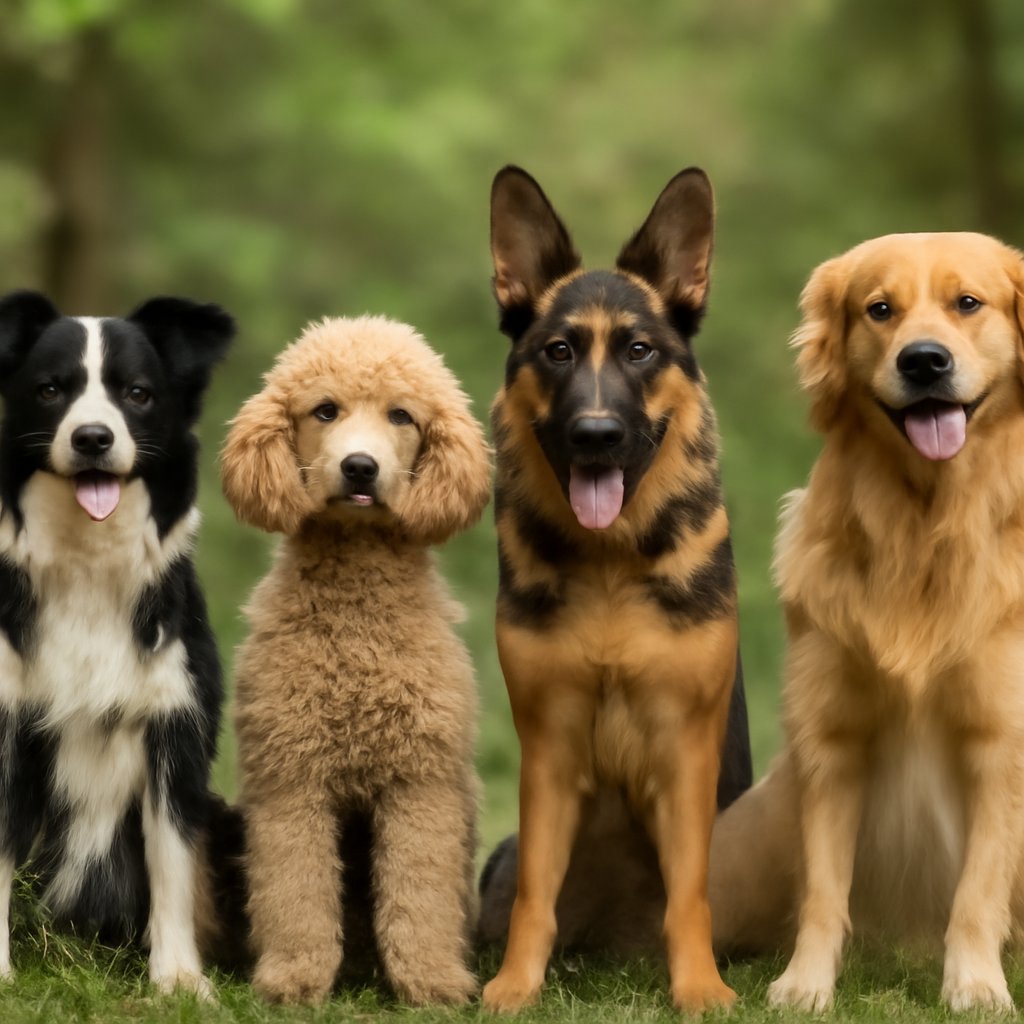
At the head of most expert lists sits the Border Collie, celebrated for lightning-fast learning and those deep herding instincts that make them stars in agility work. Next come Poodles, whose adaptive cleverness pairs beautifully with their allergy-friendly coats and eagerness to help in therapy or service roles. German Shepherds follow closely, their strong working drive and protective nature shining through in structured training and roles like search-and-rescue. Rounding out the top ten are Golden Retrievers, Doberman Pinschers, Shetland Sheepdogs, Labrador Retrievers, Papillons, Rottweilers, and Australian Cattle Dogs—each offering their own blend of loyalty, problem-solving, and trainability for owners committed to ongoing care.
The science behind dog intelligence reveals fascinating patterns that help explain why certain breeds consistently rank higher than others. Canine cognition researchers have discovered that intelligent dog breeds possess a larger proportion of gray matter in their prefrontal cortex—the region responsible for decision-making and impulse control. These breeds also tend to show remarkable social awareness, picking up on human facial expressions and tone of voice with uncanny accuracy. Studies using MRI scans have shown that working breeds like German Shepherds and Border Collies display heightened activity in brain regions associated with attention and processing novel information, which contributes to their impressive learning capabilities.
Understanding what makes each breed tick helps potential owners prepare for the unique demands of highly intelligent dogs. Border Collies, for instance, were bred to herd sheep across challenging Scottish terrain with minimal guidance, which means they possess an almost obsessive drive to work and problem-solve. Without adequate mental outlets, these dogs can develop destructive behaviors or obsessive tendencies. Poodles, originally water retrievers in Germany and France, combine their high intelligence with an eagerness to please that makes them excel in virtually any training environment. Their versatility has made them popular choices for service dog programs, therapy work, and competitive obedience trials worldwide.
German Shepherds bring a different flavor of intelligence to the table—one rooted in their heritage as herding dogs and their modern role as police and military partners. Their problem-solving ability is enhanced by a natural protective instinct and unwavering loyalty, traits that have made them invaluable in law enforcement and search-and-rescue operations. These dogs can be trained to detect explosives, locate missing persons, and respond to complex commands in high-stress situations. However, their protective nature means they require early socialization and consistent, confident leadership to channel their intelligence productively.
Training these sharp minds calls for creativity to keep boredom at bay. Puzzle toys, scent games, and brief positive sessions with treats and praise work far better than rote repetition. Interactive toys that dispense treats based on problem-solving encourage independent thinking and keep highly intelligent dogs mentally engaged throughout the day. Nose work activities tap into the natural foraging instincts that all dogs possess, providing enrichment that satisfies their need for purposeful activity. Many intelligent breeds show remarkable aptitude for advanced training methods like clicker training, which uses a distinct sound to mark the exact moment a dog performs the desired behavior correctly.
Regular vet visits catch issues like hip concerns or eye conditions early, while puppyhood socialization channels that energy into good habits. Enrichment such as nose work or advanced tricks supports both mental and physical wellness, creating the kind of routine that turns a smart rescue dog into a true family anchor. Socialization during the critical window between three and twelve weeks of age is particularly important for intelligent breeds, as it helps them develop confidence and appropriate responses to various social situations. These early experiences literally shape neural pathways and create the foundation for a well-adjusted adult dog.
Studies highlight how Border Collies can learn commands in under five repetitions and obey on the first try about 95 percent of the time. While the typical dog picks up around 165 words, the brightest breeds often handle over 250 with consistent effort. Research conducted by canine cognition experts suggests that the difference isn’t merely quantitative but qualitative—intelligent dogs don’t just learn individual commands; they understand the concept of learning itself and can apply knowledge gained in one context to new situations. A Border Collie trained to retrieve tennis balls in an enclosed yard might naturally understand how to retrieve a stick in an open field, demonstrating transfer of learning that simpler dogs might not accomplish without specific training.
Poodles hold steady in the top ranks across years of research for their problem-solving edge. Their intelligence manifests differently than Border Collies—while Border Collies excel at following complex herding patterns, Poodles demonstrate remarkable adaptability and creative thinking in various environments. They excel at learning complex sequences of behaviors and can maintain focus through lengthy training sessions, making them ideal candidates for advanced obedience competition and theatrical performance, where they’ve historically been featured in circuses and high-level trick training.
Working breeds like German Shepherds need at least an hour of combined mental and physical activity daily, and starting training around eight weeks maximizes their gifts. A typical day might include a thirty-minute walk with varied terrain and novel stimuli, twenty minutes of structured training or puzzle play, and additional free play or enrichment activities. Without this minimum engagement level, highly intelligent dogs often become frustrated and anxious, leading to problematic behaviors like excessive barking, destructive chewing, or escape attempts.
Health checks for hips, eyes, and heart remain vital for long, joyful lives together. Many highly intelligent breeds are predisposed to specific health conditions that can impact their quality of life and lifespan. German Shepherds and Labrador Retrievers commonly experience hip dysplasia, a condition affecting the hip joint that can cause pain and lameness if undetected. Poodles are prone to hip dysplasia as well as eye conditions like progressive retinal atrophy. Doberman Pinschers face a higher risk of dilated cardiomyopathy, a serious heart condition. Regular screening through breed-specific health tests can identify these issues early, allowing for management strategies that preserve your dog’s mobility and comfort throughout their life.
Choosing a dog from the smartest breeds brings deep rewards when paired with patient training and thoughtful adoption. These animals form unbreakable connections once their minds stay engaged, whether it’s a Border Collie mastering new skills or a Poodle offering gentle companionship. The bond that develops through training and mental engagement transcends typical pet ownership—it becomes a partnership based on mutual respect and understanding. With rescue roots, proper health support, and daily challenges, they become the loyal, capable partners that remind us why opening our homes to animals changes everything for the better. An intelligent dog isn’t just a pet; it’s a participant in your life who can learn your patterns, anticipate your needs, and offer companionship that grows richer with every passing year.
Sources include the American Kennel Club for breed standards, ASPCA for dog care guidance, VCA Animal Hospitals on behavior and training, PetMD breed profiles, and Veterinary Partner for professional health insights.
Sources
- American Kennel Club (AKC) – Dog Breeds Directory and breed standards
- Most Intelligent Cat Breeds Ranked for Owners
- Top Energetic Dog Breeds for Active Families
- Top Guard Dog Breeds With Calm Temperaments
- Best Low-Maintenance Dog Breeds for Busy Owners
- Best Dog Breeds for First Time Owners