
Farm Animals: Complete Guide to the Creatures That Feed Our Nation
Growing up surrounded by stories of rural life, I’ve always felt a pull toward the creatures that sustain us—not just as sources of food, but as beings with their own personalities and needs. What every pet owner who’s adopted knows is that the emotional bond we form with animals runs far deeper than utility; it’s about mutual respect and second chances. My rescue cats have taught me this lesson every single day, and it’s the same spirit that makes me appreciate the hardworking farm animals whose lives intersect with ours in such profound ways.
Farm animals are the backbone of agriculture worldwide, providing food, fiber, and companionship to billions of people. Whether you’re curious about what happens on a working farm, considering raising your own livestock, or simply want to understand where your food comes from, these animals offer a fascinating glimpse into rural life and sustainable living. They’ve been domesticated for thousands of years, adapting beautifully alongside humans.
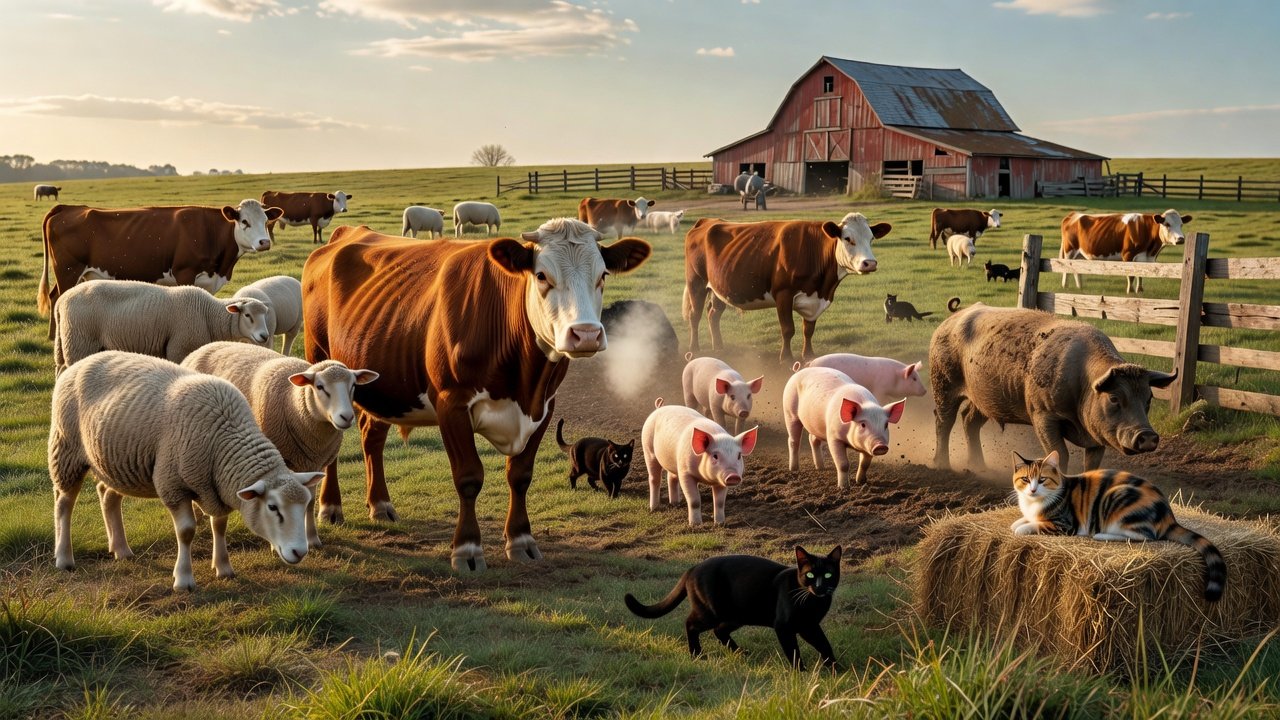
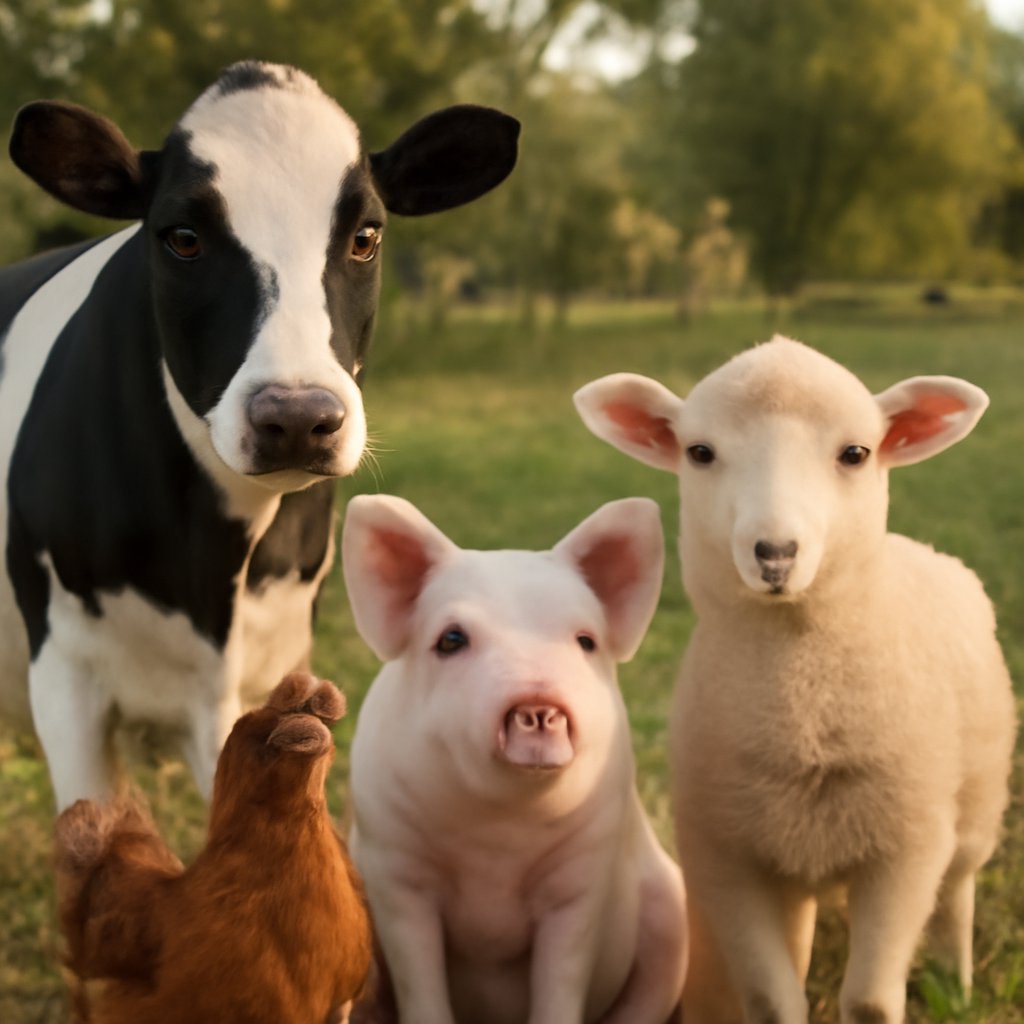
Farm animals are domesticated livestock and poultry raised by people for agricultural purposes. Unlike wild animals, they’ve been selectively bred over generations to live comfortably in human-managed environments. The most common include cattle, pigs, sheep, goats, chickens, ducks, turkeys, and horses. Each plays a unique role, contributing meat, dairy, eggs, wool, leather, and manure for fertilizer.
The relationship between humans and these animals stretches back roughly 10,000 years to the dawn of agriculture. As societies moved from hunting and gathering to settled communities, domestication became essential for survival. Today they remain vital to food security, rural economies, and cultural traditions everywhere.
Cattle rank among the most economically important. These large ruminants are raised mainly for beef and dairy, with their hides supplying leather. Dairy breeds like Holsteins and Jerseys focus on milk production, while beef breeds such as Angus and Hereford build more muscle. They typically live 18–22 years and weigh 800 to 2,400 pounds depending on breed and purpose.
Pigs are intelligent, social animals that convert feed to meat more efficiently than almost any other livestock. They’re raised extensively for pork and byproducts like lard. Studies show they can learn their names, respond to calls, and solve problems. Most market pigs reach processing age at 5–6 months, though breeding sows live longer.
Sheep and goats are smaller ruminants that thrive on pasture. Sheep supply wool, meat, and milk for cheese, while goats offer dairy, meat, fiber, and need minimal resources. Both excel as grazers on land unsuitable for larger livestock.
Poultry—chickens, ducks, and turkeys—provide eggs and meat. Chickens are the most numerous globally, laying 250–300 eggs yearly depending on breed. Ducks forage well, and turkeys deliver substantial meat yields, especially around holidays.
Horses and donkeys, though less common in industrial agriculture, still assist with transport, work, and livestock management in many places. Horses live 25–30 years and often form strong bonds with handlers.
Proper care starts with understanding each species’ needs: shelter, clean water, nutrition, and protection from predators and disease. Shelter means weather-appropriate housing—barns for cattle and horses, coops for poultry. Nutrition varies: ruminants like cattle and sheep digest grass and hay, while pigs and poultry need grain-based feeds. Clean water is non-negotiable—dairy cattle may drink 25+ gallons daily. Health management involves regular vet care, vaccinations, and biosecurity to prevent outbreaks.
These animals show remarkable behaviors: cows have best friends and stress when separated; pigs learn to use mirrors for hidden food; sheep recognize up to 50 faces for years; chickens perform a “joy dance” over tasty finds; goats solve complex puzzles; turkeys run 25 mph and fly 55 mph; horses maintain social hierarchies; ducks mate for life.
In sustainable systems, rotational grazing with cattle and sheep improves soil, sequesters carbon, and cuts erosion. Pasture-raised poultry controls insects and produces rich manure. Heritage breeds preserve genetic diversity for long-term resilience. Small-scale farms often rely on animals for natural fertilizer and pest control, creating closed-loop systems.
Many dream of raising farm animals on homesteads. Before starting, factor in space, local regulations, financial commitment, education, and community support. Backyard chickens need little room, but cattle require more land and infrastructure.
As agriculture evolves, concerns over sustainability and welfare drive change toward more humane, efficient practices. Consumer interest in knowing food origins supports small farmers and breed conservation. Farm animals will stay essential, but our expectations and care continue to shift.
At heart, these creatures are far more than commodities—they carry personalities, preferences, and social bonds. My rescue cats have shown me how adoption and rescue culture honor that same truth across species. By supporting ethical practices and learning their stories, we ensure they thrive for generations.