
Caring for Your Dachshund’\”s Back: Prevention and Health Tips
“`html

As a Dachshund owner, you’re likely familiar with these compact dogs’ outsized personality and drive, yet their elongated conformation also predisposes them to significant spinal stress. With targeted management grounded in clinical observation and consistent training protocols, you can help maintain comfort and mobility over a typical 12-to-15-year lifespan. This overview addresses spinal protection through routine handling practices, early clinical indicators, and evidence-based health strategies.
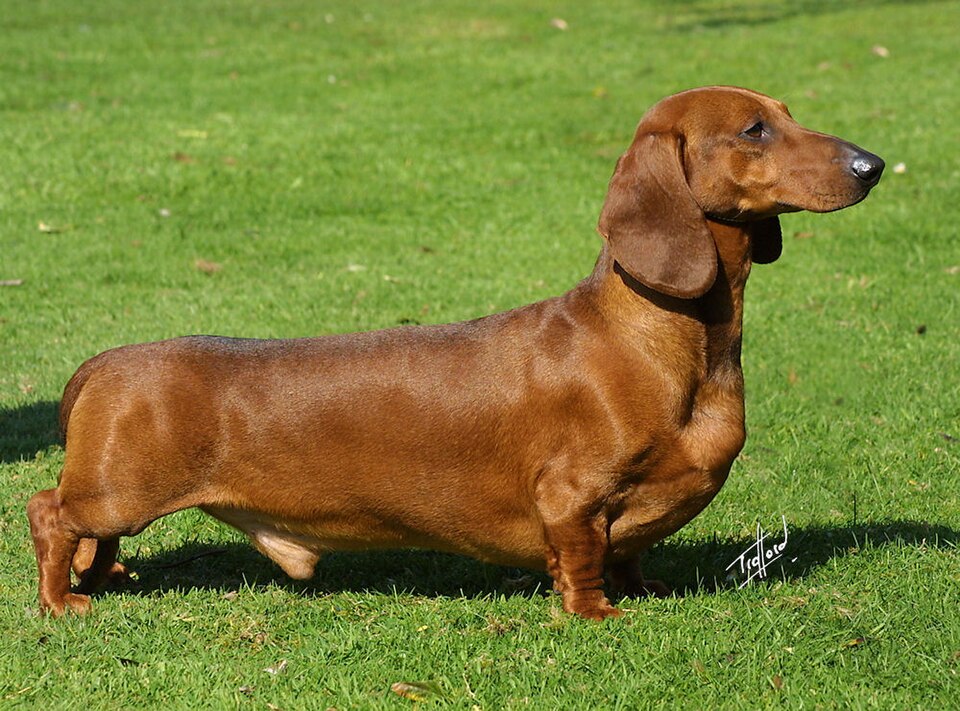
Dachshunds carry a long vertebral column supported by abbreviated limbs, which amplifies mechanical loading along the thoracolumbar junction. Bred historically for burrow hunting, the same anatomy that allowed them to maneuver underground now heightens disc vulnerability. In my years as a vet tech, I’ve seen this situation countless times in dogs whose owners initially dismissed subtle gait changes until an acute episode appeared.
Most members of the breed are chondrodystrophic, carrying the genetic trait for disproportionate limb and spinal growth that accelerates nucleus pulposus degeneration within the intervertebral discs. Responsible breeding programs perform radiographic screening, though the inherited conformation remains a factor even in carefully selected lines. From a clinical standpoint, what owners miss here is how even moderate jumping or twisting transmits forces directly to already compromised discs, hastening extrusion or protrusion.
The leading spinal disorder is intervertebral disc disease (IVDD), in which degenerative discs impinge on the spinal cord or nerve roots. Secondary concerns include degenerative joint disease and acute soft-tissue strains. Early recognition permits owners to modify activity thresholds before irreversible cord compression develops.
Subtle behavioral shifts often precede major decompensation. Watch for hesitation at curbs or furniture, a lowered head carriage with thoracolumbar kyphosis, vocalization on spinal palpation, proprioceptive deficits in the pelvic limbs, or incontinence in advanced cases. Should any of these appear, immediate activity restriction followed by veterinary evaluation is essential.
Understanding the mechanics of spinal injury in Dachshunds provides crucial context for prevention efforts. The intervertebral discs consist of a fibrous outer ring (annulus fibrosus) and a gel-like center (nucleus pulposus). In chondrodystrophic breeds, this nucleus begins deteriorating earlier than in other dog populations, sometimes as early as two to three years of age, even before clinical signs emerge. This degeneration reduces the disc’s ability to absorb shock and maintain proper spacing between vertebrae. Over time, the compromised disc material can herniate into the spinal canal, compressing nerves and potentially causing pain, weakness, or paralysis depending on severity and location.
Risk factors extend beyond genetics. Obesity significantly accelerates spinal degeneration by increasing axial loading during normal movement. A Dachshund that is just 10 percent overweight experiences substantially greater compressive forces along the spine with every step. Additionally, rapid growth during puppyhood can stress developing discs, making careful nutrition during the first year of life particularly important. Avoiding excessive calcium supplementation unless specifically recommended by your veterinarian helps prevent overly rapid skeletal development.
Prevention centers on reducing repetitive axial loading. Maintain ideal body condition through controlled leash walks of 15–20 minutes rather than explosive play; swimming provides excellent core conditioning without concussive impact. In training sessions I conduct, I routinely substitute low ramps or pet stairs for furniture access and coach owners on two-handed lifts that cradle both thoracic and pelvic girdles to preserve neutral spinal alignment. Orthopedic bedding further distributes pressure during recumbency.
The importance of proper lifting technique cannot be overstated. When picking up a Dachshund incorrectly—such as allowing the hindquarters to dangle while supporting only the front end—you create tremendous stress across the lumbosacral junction. The correct method involves supporting the entire length of the spine, with one hand cradling the chest and the other supporting the hindquarters so the dog’s body remains horizontal and rigid. This technique should be taught to all family members, including children, and consistently reinforced.
Environmental modifications play an equally critical role in long-term spinal health. Low-sided beds or orthopedic mats distributed throughout your home encourage rest without requiring jumping. Pet ramps leading to furniture or vehicles eliminate the repetitive impact of jumping down, which is particularly damaging. Some owners use elevated food and water bowls to reduce excessive neck flexion during meals, though this should be discussed with your veterinarian as proper bowl height depends on individual conformation.
Exercise should be carefully calibrated rather than eliminated. While jumping and repetitive twisting movements are contraindicated, regular controlled activity strengthens supporting musculature and maintains healthy disc nutrition. Daily walks at a moderate pace, allowing the dog to set the rhythm, are ideal. Treadmill walking under supervision can provide consistent, controlled exercise independent of outdoor terrain variables. Avoid activities that encourage sudden direction changes, such as chasing toys or playing tug-of-war, as these create rotational forces that compromise disc integrity.
Weight management deserves particular emphasis as perhaps the single most modifiable risk factor. Consulting with your veterinarian to establish an ideal target weight and appropriate caloric intake helps prevent obesity-related spinal disease. Measuring treats as part of daily caloric allocation rather than providing them freely, choosing lower-calorie training treats, and utilizing vegetables like green beans as training rewards can effectively manage weight while maintaining the enrichment dogs derive from food.
Nutritional support specifically targeting joint and disc health has gained evidence in recent years. Omega-3 fatty acids, glucosamine, chondroitin sulfate, and green-lipped mussel supplements have demonstrated modest benefits in some studies for maintaining cartilage integrity and reducing inflammatory responses. While these supplements are not curative, they may provide incremental protection when combined with other preventive measures. Discuss supplementation options with your veterinarian, as quality varies significantly among commercial products.
When clinical signs emerge, conservative protocols emphasize four to six weeks of strict crate confinement to permit disc resorption, combined with anti-inflammatory pharmacotherapy and monitored physical rehabilitation. Surgical decompression is reserved for non-ambulatory patients or those unresponsive to medical management. Follow-up neurologic assessments guide return-to-function timelines.
Recovery from IVDD episodes requires patience and consistency. During the acute confinement period, bathroom breaks should occur on-leash with minimal activity beyond basic mobility. Many owners find that dividing this period into smaller “windows” of activity spread across the day rather than longer sessions helps prevent re-injury. Pain management is crucial, as dogs experiencing discomfort will often restrict activity naturally, but persistent pain can lead to anxiety and behavioral changes.
Physical rehabilitation, when implemented under professional guidance, accelerates recovery and builds long-term protection. A certified canine rehabilitation therapist can design exercises targeting the core muscles that support the spine, often including balance work, gentle range-of-motion activities, and gradually progressive strengthening protocols. These interventions can sometimes prevent recurrent episodes in dogs that have experienced prior disc extrusions.
Routine wellness examinations allow serial discussion of spinal health, with diagnostic imaging pursued at the first indication of discomfort. Establishing continuity with a practitioner familiar with chondrodystrophic breeds ensures recommendations remain tailored to the individual dog’s conformation and activity profile. Some veterinarians recommend baseline spinal radiographs for middle-aged Dachshunds even without clinical signs, allowing early identification of degenerative changes that might warrant preventive modifications.
Consistent application of these measures enables most Dachshunds to sustain an active lifestyle despite their anatomic predisposition. By combining genetic awareness, environmental modification, appropriate exercise, weight management, and early intervention when needed, you can help ensure your Dachshund enjoys years of comfortable mobility and an excellent quality of life.
Sources
- American Kennel Club (AKC) – Dachshund Breed Information and Health Guidelines
- ASPCA – Dog Health and Wellness Resources
- Essential Health Screenings for Breeding Dogs
- Health Risks Associated with Overfeeding Dogs
- Health Benefits of Regular Dental Care for Dogs
- Understanding Feline Leukemia and Prevention Methods
- Benefits of Dental Care for Pet Health