
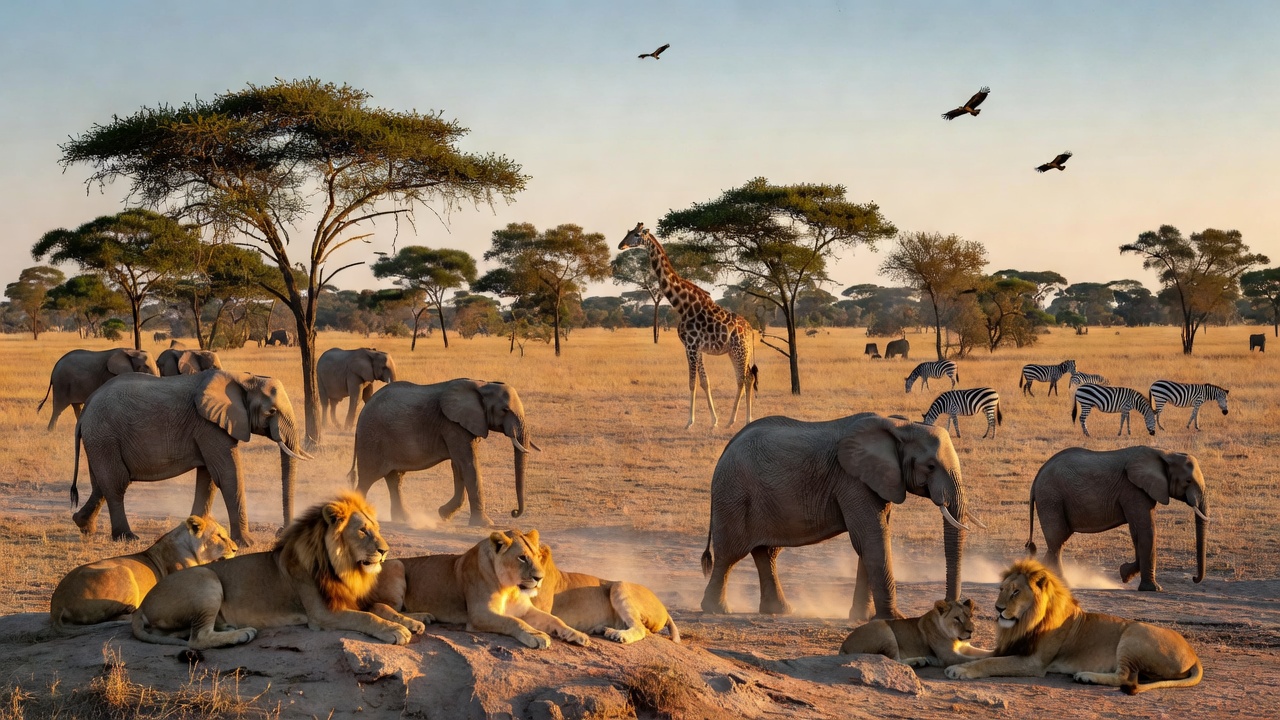
Savanna Animals: Wild Icons of Africa’s Grasslands
If you’ve ever watched a nature documentary and felt your jaw drop at a lion sprinting through golden grass or a herd of elephants moving like a slow, unstoppable tide, you’ve already fallen for savanna animals. These grasslands, found mostly across Africa but also in parts of Australia and South America, host some of the most recognizable and fascinating creatures on Earth. There’s a reason safaris top so many bucket lists — nowhere else on the planet packs this much raw wildlife drama into one open landscape.
This guide walks through who actually lives in the savanna, how they’ve adapted to such a tough environment, and why these ecosystems matter far beyond their postcard views.
What Makes a Savanna Different From Other Habitats
A savanna is essentially a transition zone — not quite a forest, not quite a desert. Picture wide-open grassland dotted with scattered trees like acacias, baobabs, and the occasional cluster of shrubs. Rainfall is seasonal and often dramatic: months of drought followed by a wet season that turns everything green almost overnight.
That seasonal swing is the whole story behind savanna animals. Species here have evolved around scarcity — long droughts, patchy water, and grass that’s either abundant or nearly gone. Savannas are commonly estimated to cover roughly a fifth of Earth’s land surface, making them one of the most widespread yet underappreciated biomes around.
The Wet and Dry Seasons Shape Everything
During the wet season, grass grows tall and water is plentiful, so grazing animals fatten up and reproduce. When the dry season hits, herds migrate hundreds of miles searching for water and greener pasture — the Great Migration across the Serengeti and Maasai Mara being the most famous example.
The Most Iconic Savanna Animals You Should Know
Ask anyone to name an African animal and you’ll probably hear one of these first. They’re not just famous — they’re each brilliantly suited to savanna life in their own way.
- African Elephants – The largest land animals alive, using their trunks to strip bark and dig for water during droughts.
- Lions – The only truly social big cat, living in prides that cooperate to hunt across open terrain.
- Giraffes – Their height lets them browse acacia leaves other herbivores can’t reach, avoiding competition for food.
- Zebras – Their stripes may help confuse predators and regulate body temperature, according to research highlighted by National Geographic.
- Cheetahs – Built for speed, reaching up to 70 mph in short bursts to chase down gazelles.
- African Wild Dogs – Highly social pack hunters with one of the highest hunting success rates of any predator.
- Wildebeest – The stars of the Great Migration, moving in herds over a million strong.
- Warthogs – Surprisingly adaptable omnivores that use abandoned burrows for shelter from heat and predators.
Predators and Prey Locked in Constant Balance
The savanna runs on a tight predator-prey relationship. Lions, cheetahs, leopards, and hyenas keep herbivore populations in check, while herbivores like zebras and antelope shape the grassland itself through constant grazing. Remove one link and the whole system wobbles — which is exactly what conservationists worry about as habitats shrink.
Smaller Savanna Animals That Don’t Get Enough Credit
It’s easy to fixate on the “big five,” but the smaller residents of the savanna are just as essential to how the ecosystem functions.
- Meerkats – Cooperative diggers with rotating lookout duty to spot aerial predators.
- Termites – Their massive mounds aerate soil and provide microhabitats used by lizards, snakes, and even birds.
- Dung Beetles – Nature’s cleanup crew, recycling waste from massive herbivores back into the soil.
- Secretary Birds – Tall, long-legged raptors that stomp on snakes and rodents instead of hunting from the air.
- Ground Squirrels – Constant burrowers that help aerate dry, compacted soil.
Take these species out of the picture and the “big” animals wouldn’t last long — savannas function as an interconnected web, not a collection of standalone stars.
How Savanna Animals Survive Extreme Heat and Drought
Life on the savanna means dealing with brutal sun, long dry spells, and unpredictable rainfall. Over generations, animals have developed some genuinely clever survival tricks.
Physical Adaptations
Large ears, like those of elephants and bat-eared foxes, help radiate excess body heat. Light-colored coats reflect sunlight, and many species are most active at dawn and dusk to avoid the harshest midday sun.
Behavioral Adaptations
Migration is probably the most dramatic survival strategy — wildebeest and zebras travel enormous distances following the rains. Others, like meerkats and warthogs, simply retreat underground during the hottest hours. Predators such as lions often hunt at night or in the cooler early morning, conserving energy when temperatures spike.
Why Protecting Savanna Habitats Matters
Savanna ecosystems face real pressure from agriculture expansion, poaching, and climate shifts that disrupt historic rainfall patterns. The International Union for Conservation of Nature (IUCN) tracks population declines in species like African elephants and cheetahs, both increasingly squeezed by shrinking territory.
Supporting reputable wildlife conservancies, choosing ethical safari operators, and simply learning more about these animals all help keep pressure on protecting these landscapes. Savannas aren’t just scenic backdrops — they’re some of the most biologically rich, tightly balanced ecosystems on the planet, and every species from elephants to dung beetles plays a role in keeping that balance intact.
Next time you see a photo of a lion pride lounging under an acacia tree, remember there’s an entire hidden network of survival strategies, seasonal rhythms, and interdependent species making that single scene possible.