
Tips for Managing Pet Shedding During Seasons

There’s something deeply grounding about watching the seasons change alongside the animals we share our homes with—especially when those companions came into our lives through rescue. Managing pet shedding during seasons isn’t just about keeping the house tidy; it’s about honoring the natural rhythms of the creatures we’ve welcomed from shelters and foster homes. As temperatures shift, dogs and cats naturally adjust their coats, leading to increased hair loss that can overwhelm carpets, furniture, and even affect indoor air quality. Understanding these patterns helps owners of various dog breeds and cat breeds implement proactive strategies that minimize mess while promoting healthy skin and fur. Seasonal shedding is a normal biological process, but excessive or uneven loss may signal underlying issues, making regular monitoring important for animal health. My rescue cats have taught me that these transitions often mirror the adjustments our adopted pets make when they finally feel safe in a forever home.
What every pet owner who’s adopted knows is that our animals carry stories in their coats—sometimes from uncertain beginnings—and seasonal changes can bring those histories to the surface in unexpected ways. Seasonal shedding occurs primarily in spring and fall as pets transition between thick winter coats and lighter summer ones. Double-coated dog breeds like German Shepherds and Siberian Huskies experience heavy undercoat loss, while single-coated breeds such as Greyhounds shed less dramatically. Cat breeds including Persians and Maine Coons also molt noticeably during these periods. This process is driven by photoperiod changes and temperature fluctuations, allowing the body to regulate insulation efficiently.
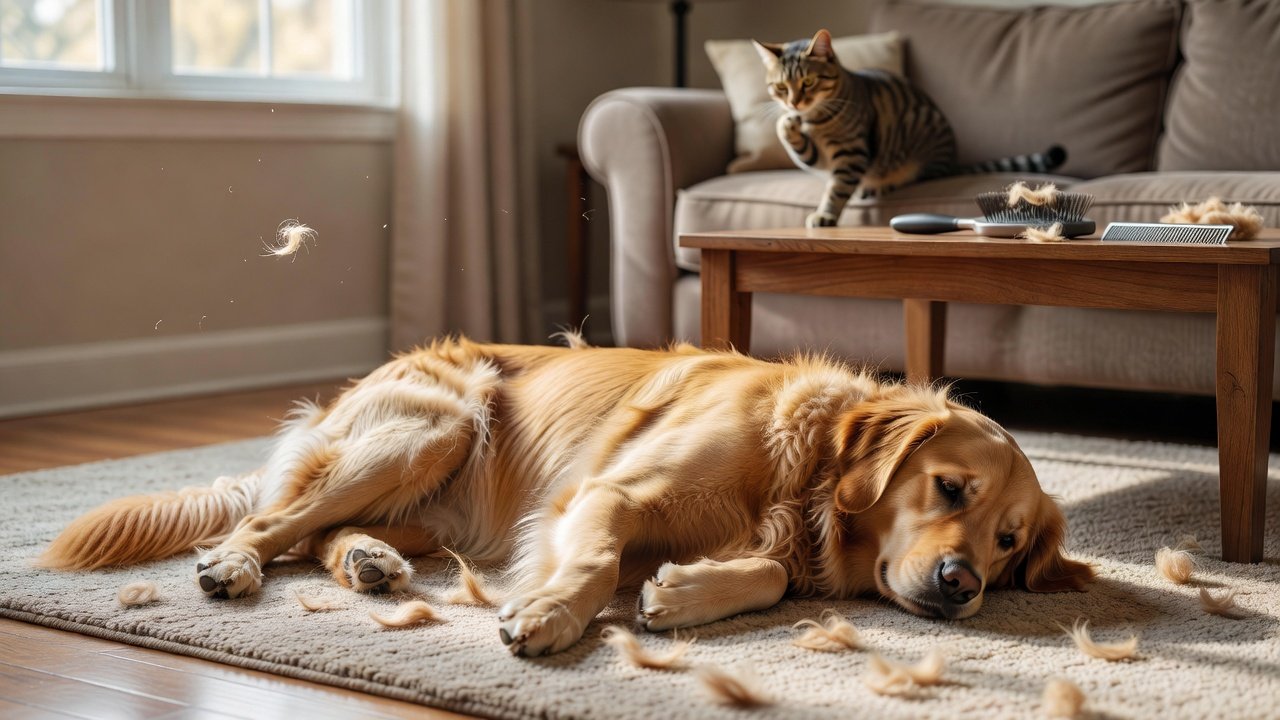
In spring, longer daylight hours trigger the release of the dense winter undercoat. Owners often notice clumps of fur around the house, especially with Labrador Retrievers and Golden Retrievers. Consistent brushing during this phase prevents matting and reduces the volume of loose hair that ends up on surfaces. My trio of rescue cats always seems to leave little reminders of their resilience scattered across the couch during these months, a gentle nudge that grooming time is also bonding time.
Fall brings the opposite transition as pets prepare for colder months. Shedding is typically lighter but still requires attention to maintain coat condition. Training your pet early to tolerate grooming tools makes these seasonal transitions smoother and strengthens the human-animal bond. I’ve found that rescue animals, in particular, respond beautifully to patient routines that build trust they may not have known before.
Effective grooming forms the cornerstone of managing pet shedding during seasons. Daily or weekly brushing removes loose hair before it spreads, while breed-specific tools optimize results. For example, slicker brushes work well on long-haired cat breeds like Ragdolls, whereas undercoat rakes suit thick-coated dog breeds such as Bernese Mountain Dogs. Establishing a grooming routine also serves as positive training reinforcement. Reward calm behavior during sessions to reduce anxiety, turning a potentially stressful task into an enjoyable activity. Bathing every four to six weeks with moisturizing shampoos can further loosen dead hair without stripping natural oils essential for skin health.
Invest in deshedding tools designed for high-shedding breeds. Use them outdoors when possible to contain flying fur. Frequency should increase to every other day during peak shedding months for optimal control. Nutrition plays a vital role in coat quality and can reduce excessive seasonal shedding. Diets rich in omega-3 and omega-6 fatty acids support skin barrier function and promote healthier fur growth. Adding salmon oil or flaxseed supplements benefits many dog breeds and cat breeds prone to dry skin.
Environmental controls further aid management. Regular vacuuming with HEPA filters captures airborne dander, while air purifiers improve indoor air quality during heavy molt periods. Wash pet bedding weekly in hot water to eliminate accumulated hair and allergens. For pets with severe shedding linked to allergies or hormonal imbalances, consult a veterinarian to rule out health conditions. Create designated shedding zones with easy-to-clean mats. Limit access to certain rooms during peak seasons and use lint rollers daily on upholstery. These small adjustments significantly cut down on cleanup time while keeping your living space comfortable.
Double-coated breeds can lose up to 50% of their undercoat during spring transitions, requiring dedicated grooming sessions several times weekly. Omega fatty acid supplementation has been shown to reduce visible shedding by 20-30% in controlled studies involving various dog breeds and cat breeds. Indoor pets shed year-round at lower volumes, but seasonal spikes still increase household cleaning demands by 40% on average. Regular brushing during peak seasons removes approximately 80% of loose hair before it reaches floors and furniture. Health-related shedding triggered by parasites or poor nutrition accounts for nearly 15% of veterinary visits related to coat issues. Positive reinforcement training for grooming reduces stress-related behaviors in 70% of pets, improving overall animal health outcomes.
At the end of the day, these small acts of care remind us why we open our hearts to rescue animals in the first place. Managing pet shedding during seasons combines consistent grooming, balanced nutrition, breed-specific care, and smart environmental strategies. By understanding the natural cycles of dogs and cats, owners can maintain cleaner homes while supporting long-term coat and skin health. Early training and professional veterinary guidance ensure that seasonal changes remain manageable rather than overwhelming. With these tips, pet parents enjoy stronger bonds with their companions and fewer fur-related frustrations throughout the year.