
Zoo Animals: Welfare, Enrichment, and What They Teach Pet Owners
Zoo Animals: Fascinating Facts and Care Tips for Animal Lovers
If you’ve ever stood in front of an enclosure watching majestic creatures, you know how zoo animals can spark wonder in both kids and adults. Places like these bring us close to species we might never see otherwise, from towering giraffes to playful otters. As someone who’s spent years navigating multi-cat households with three rescue cats, I find myself watching zoo animals through a different lens than most visitors — I’m always looking for the same signs of comfort, curiosity, and stress that I watch for at home. It turns out zookeepers and rescue pet owners are chasing the same goal: helping an animal feel safe enough to be itself.

Why Zoo Animal Welfare Looks a Lot Like Pet Welfare
Modern accredited zoos measure success by behavioral welfare indicators, not just visitor headcounts. Keepers track appetite, social interaction, resting posture, and how an animal responds to routine changes — the exact same checklist I use when a new rescue cat joins my household. A gorilla that stops engaging with enrichment toys is showing the same withdrawal signal as a cat that stops using a favorite scratching post. Recognizing these parallels has made me a sharper observer of my own pets, and it’s part of why I think every pet owner benefits from an occasional zoo visit with a more analytical eye.
Species Survival Plans: The Unseen Work Behind the Exhibits
Most zoo animals on public display are part of Species Survival Plans (SSPs) — coordinated, studbook-tracked breeding programs run through the Association of Zoos and Aquariums (AZA). These programs manage genetic diversity across accredited institutions so that no single population becomes inbred or unsustainable. The black-footed ferret, once believed extinct in the wild, was rebuilt entirely from 18 surviving individuals through an SSP and has since been reintroduced across eight U.S. states. The California condor followed a similar path, dropping to just 27 birds in 1987 before a captive breeding push brought the population back above 500 today.
How SSPs Actually Work
- Every individual animal is tracked in a studbook with full lineage data
- Breeding recommendations are made by population geneticists, not individual zoos
- Animals are sometimes transferred between accredited facilities purely for genetic pairing
- Some SSP populations exist solely to support eventual wild reintroduction, not permanent display
What Enrichment Really Involves
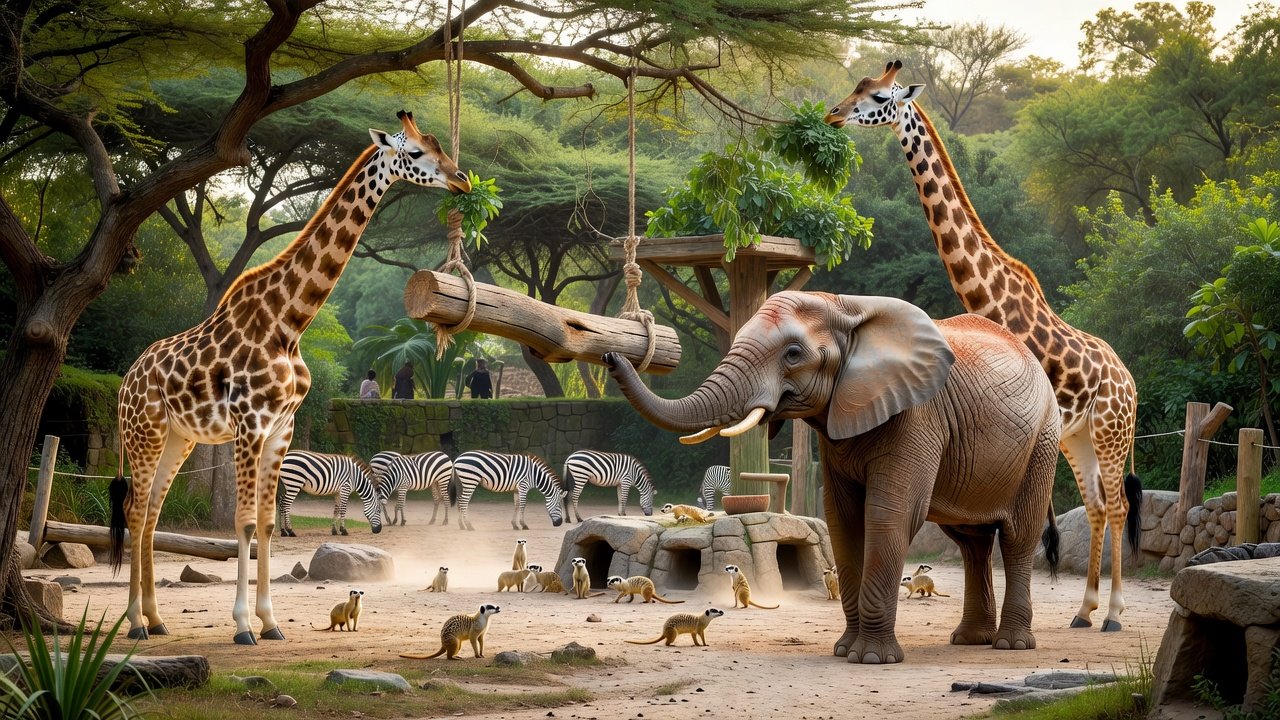
Enrichment is the deliberate design of an animal’s environment to encourage natural behaviors — foraging, problem-solving, social interaction — instead of passive existence in a cage. Elephants at accredited zoos get puzzle feeders that force them to use their trunks to extract food, mimicking the hours of foraging they’d do in the wild. Big cats receive scent enrichment (spices, perfumes, even other zoos’ animal bedding) that triggers investigative behavior. Primates get climbing structures and problem-solving tasks that mirror the mental demands of finding food in a forest canopy.
This isn’t just for show — the AZA requires documented enrichment plans as part of accreditation, and facilities that fail to provide adequate behavioral enrichment can lose accreditation entirely. It’s a much higher bar than most people realize, and it’s the reason accreditation logos matter more than a zoo’s size or popularity.
Reading Zoo Animal Body Language (A Skill Every Animal Lover Should Build)
You don’t need a biology degree to start reading welfare signals in zoo animals — the same instincts that help a rescue pet owner spot anxiety work here too:
- Repetitive pacing along the same path can indicate stress or under-stimulation, similar to a dog pacing before a storm
- Excessive self-grooming or self-directed behavior in primates can signal the same anxiety response seen in cats that over-groom
- Retreating to the same corner repeatedly may mean an animal hasn’t fully acclimated to its space — the zoo equivalent of a rescue cat hiding under the bed
- Active investigation of new enrichment items is a strong positive welfare sign, just as it is when a shelter dog explores a new toy without hesitation
Watching for these signs turns a zoo visit from passive entertainment into an active lesson in animal behavior — one that translates directly to reading your own pets better at home.
The Conservation Math Behind Your Ticket
Accredited zoos reinvest a meaningful share of admission revenue into field conservation. AZA-accredited institutions collectively contribute more than $250 million annually to conservation projects worldwide, according to AZA’s own reporting — funding anti-poaching patrols, habitat restoration, and field research stations that most visitors never see. That connection between a Tuesday afternoon at the zoo and a ranger patrol in a national park half a world away is easy to miss, but it’s real and it’s measurable.
What to Actually Look For on Your Next Visit
Skip the busiest exhibits at peak crowd times and instead time your visit around morning feeding — that’s when zoo animals are most active and enrichment is freshest. Read the signage fully; accredited zoos post real information about diet, lifespan, and conservation status, not just fun facts. Ask keepers questions during scheduled talks — most are eager to share detail that never makes it onto placards. And look for the AZA accreditation seal before assuming a facility meets rigorous welfare standards; not every roadside attraction calling itself a “zoo” does.
The Takeaway for Pet Owners
Whether you’re watching a gorilla work through a puzzle feeder or a rescue cat cautiously investigate a new toy, the underlying principle is identical: animals thrive when their environment gives them something to do, something to figure out, and somewhere safe to retreat. That’s the lesson I bring home from every zoo trip, and it’s shaped how I set up enrichment for my own cats — more climbing space, rotating toys, and quiet corners they can claim as their own.
Sources
Related Posts
- Zoo Animals: Complete Guide to the World’s Most Fascinating Creatures
- Extinct Animals: Fascinating Species Lost to History and What We Can Learn
- Are Spiders Animals? What Every Pet Owner Should Know
- Baby Animals