
Exploring the History of Siamese Cats
“`html
I’ve always been drawn to the stories that cats carry with them, the quiet histories that shape who they are when they finally find their way into our homes. Learning about Siamese cats feels especially meaningful to me as someone who advocates for rescue adoptions, because it reminds us that every cat, no matter their lineage, deserves a chance at a loving forever home. My three rescue cats have taught me that the deepest bonds often come from unexpected beginnings, and what every pet owner who’s adopted knows is that a cat’s past only adds to the richness of the present.
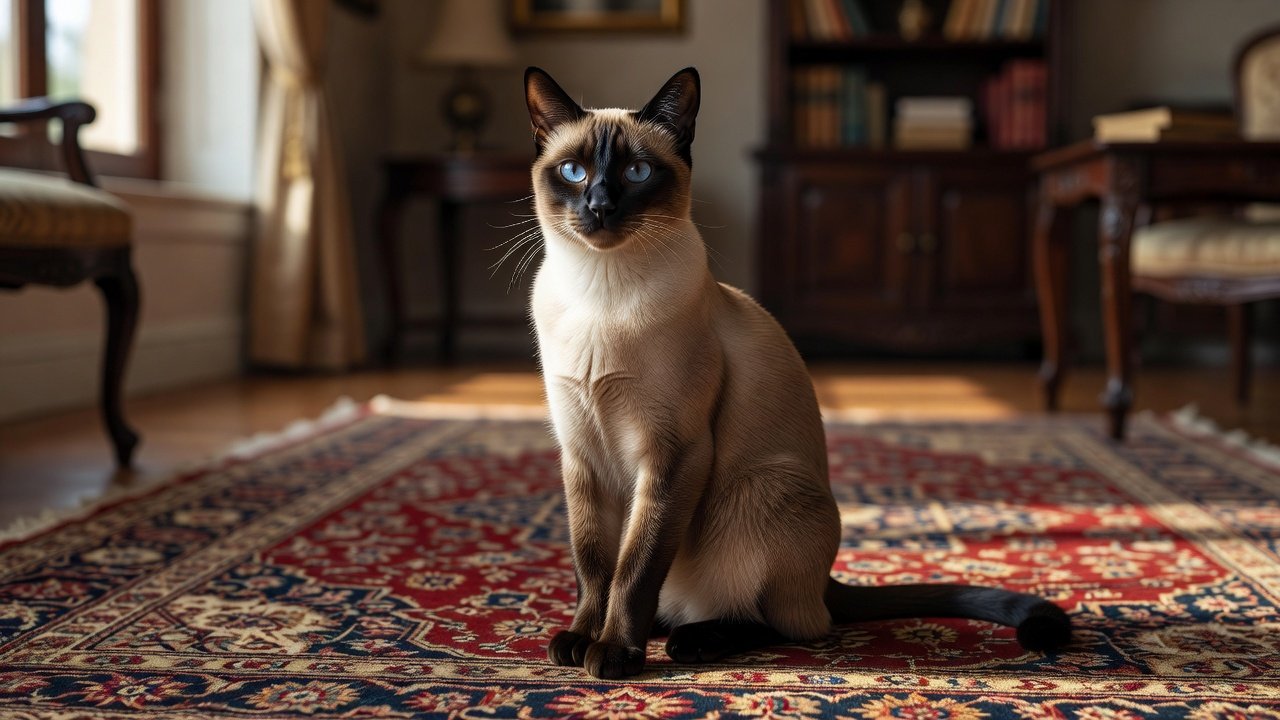
Siamese cats trace their roots to the Kingdom of Siam, now Thailand, where they lived as revered companions in royal palaces and Buddhist temples as far back as the 14th century. Ancient manuscripts like the Tamra Maew, or Cat-Book Poems, describe their signature color points and sapphire-blue eyes. In Thai culture they were seen as bringers of good fortune and protectors against evil spirits, often sharing daily life with monks and nobility.
The Tamra Maew, preserved in the National Library of Thailand, contains some of the earliest written descriptions of pointed cats, with illustrations that bear a striking resemblance to modern Siamese. These ancient texts weren’t just casual observations—they were formal records that monks maintained with careful attention to detail. The reverence with which Siamese cats were treated in temples speaks to their special status; some were even believed to house the souls of deceased monks, making them spiritual guides within monastery walls.
Legends only deepen that connection. One tale tells of a Siamese cat who guarded a princess’s sacred goblet by wrapping its tail around it, explaining the breed’s distinctive kinked tail. Another legend describes how Siamese cats earned their crossed eyes by staring so intently at a golden Buddha statue that their eyes became permanently fixed in that devoted gaze. These stories show how intertwined Siamese cats were with Thai society long before they traveled west. Temple murals and artistic records further confirm their longstanding presence in Southeast Asia, with some scholars dating their presence back even further than written records suggest.
The rarity of Siamese cats in their native homeland made them even more precious to those who possessed them. Theft of a royal Siamese cat was considered a serious crime, and breeding them was carefully controlled to maintain their exclusivity within the palace and temple communities. This protective attitude shaped the breed’s early characteristics and contributed to the genetic foundation that would define them for centuries to come.
The story shifts in the late 19th century when the first Siamese cats reached Europe. In 1884 a pair was gifted to the British Consul-General in Bangkok and shown at London’s Crystal Palace Cat Show, where their striking looks created an immediate stir. By the 1890s they had arrived in the United States and found favor among well-to-do families. Early breeders dealt with health challenges from limited genetic diversity, leading to careful breeding practices that helped stabilize the breed.
The Victorian era fascination with Siamese cats was intense but not without controversy. Some early accounts describe the breed as delicate and temperamental, prone to respiratory issues that made them challenging to keep alive in Western climates. Yet this difficulty only increased their allure among wealthy collectors who saw them as exotic status symbols. Breeding programs that began in this era were often haphazard, with breeders prioritizing appearance over health—a practice that left lasting effects on the breed.
Victorian fanciers noted high kitten mortality rates during those early imports, yet dedicated enthusiasts formed the first Siamese Cat Club in England in 1901. Those efforts created standards that celebrated the pointed pattern, almond-shaped eyes, and slender build we recognize today. The club’s early records show passionate debate about what constituted an ideal Siamese cat, with breeders disagreeing on everything from head shape to tail kinks.
The early 20th century saw Siamese cats explode in popularity across America and Europe. Cat shows became venues where breeders competed fiercely, and the breed’s distinctive appearance made them instant crowd favorites. Marketing Siamese cats as mysterious, intelligent, and deeply affectionate creatures created demand that far outpaced supply. This popularity, while validating the breed’s appeal, also led to irresponsible breeding practices that prioritized profit over welfare.
Over the 20th century the breed developed two main looks: the Traditional or Applehead type with its rounder face, and the Modern or Wedgehead variety with a more elongated head. The Cat Fanciers’ Association recognized Siamese cats in 1906. Responsible breeders today prioritize genetic testing to support healthier cats for the families who welcome them.
The divergence between Traditional and Modern Siamese types represents one of the most significant debates in cat breeding history. The Modern type, with its increasingly angular features and slender build, became the preferred show standard for decades. However, many breeders and owners began to recognize that these exaggerated features came with increased health vulnerabilities. The Traditional Siamese, closer to the cats originally brought from Thailand, began to gain advocates who argued for returning to a healthier, more moderate type. Today, both types are recognized and valued, with many rescue organizations and ethical breeders championing the Traditional type for its generally superior health outcomes.
What every pet owner who’s adopted knows is that understanding a breed’s health history helps us care for them better. Siamese cats can be prone to amyloidosis, a serious condition where abnormal proteins accumulate in organs, particularly the kidneys and heart. Respiratory concerns tied to their facial structure, dental issues from crowded teeth, and certain genetic eye conditions like progressive retinal atrophy are also documented in the breed. Regular vet visits, a diet with proper taurine, and consistent dental care make a real difference. Because they’re naturally active yet can settle into indoor life, daily interactive play keeps both body and mind sharp. My rescue cats have taught me that these simple routines build trust and prevent loneliness.
Preventative care for Siamese cats should include annual bloodwork to monitor kidney function, especially as they age. Many veterinarians recommend starting screening for common Siamese health issues around age five, even for cats without symptoms. Working with breeders or rescue organizations that conduct genetic testing can significantly reduce the likelihood of inheriting serious conditions. For adopted Siamese cats, learning their medical history—if available—provides crucial information for proactive care planning.
Siamese cats are famously intelligent and vocal, traits that shine through positive-reinforcement training with treats, praise, and short daily sessions. They respond beautifully to consistency and gentle guidance, whether you’re teaching leash walking or puzzle toys. Those same qualities that made them treasured companions centuries ago make them wonderful teachers for patient adopters today.
The vocalization of Siamese cats is one of their most distinctive and sometimes overwhelming traits. Unlike most cats, Siamese engage in extended conversations with their owners, with some cats developing vocabularies of dozens of distinct sounds. This chattiness served a purpose in temples and palaces—monks and nobility saw it as a sign of intelligence and spiritual awareness. In modern homes, this trait can be endearing or exhausting depending on your tolerance for a talkative feline companion. Some Siamese cats will follow their owners from room to room, narrating every activity with meows, chirps, and yowls.
Understanding the Siamese personality is key to building a successful relationship with one. They are intensely people-oriented and can develop separation anxiety if left alone for extended periods. They bond deeply with their chosen human and often prefer one family member over others. This loyalty, while beautiful, means Siamese cats require more interactive time than many other breeds and may not thrive in households where they’ll be left alone for long workdays without enrichment.
Siamese cats originated in Thailand and appear in 14th-century records. They reached the West around 1884 and caused a sensation at European shows. With good care they often live 12 to 15 years, though some live into their late teens. They remain one of the most talkative breeds, a trait noted throughout their history. Modern programs stress genetic diversity to reduce inherited risks. They thrive with mental stimulation and interactive play as indoor companions. Annual veterinary care and dental attention are especially helpful given their predispositions.
The journey of Siamese cats, from ancient temples to modern living rooms, ultimately circles back to the same truth I return to with every adoption story: when we open our homes to cats in need, we honor their heritage by giving them the safety and love they deserve. Whether your Siamese comes through a rescue or a responsible placement, the emotional bond that forms is what truly carries their story forward. The traits that made them sacred in ancient Thailand—their intelligence, their devotion, their ability to communicate—remain unchanged in the Siamese cats
Related Posts
- Understanding the Social Needs of Siamese Cats
- Understanding the Behavior of Bengal Cats
- Preventive Care Tips for Keeping Cats Healthy
- Facts About the Playful Personality of Bengal Cats
- Why Sphynx Cats Need Special Skin Care Routines