
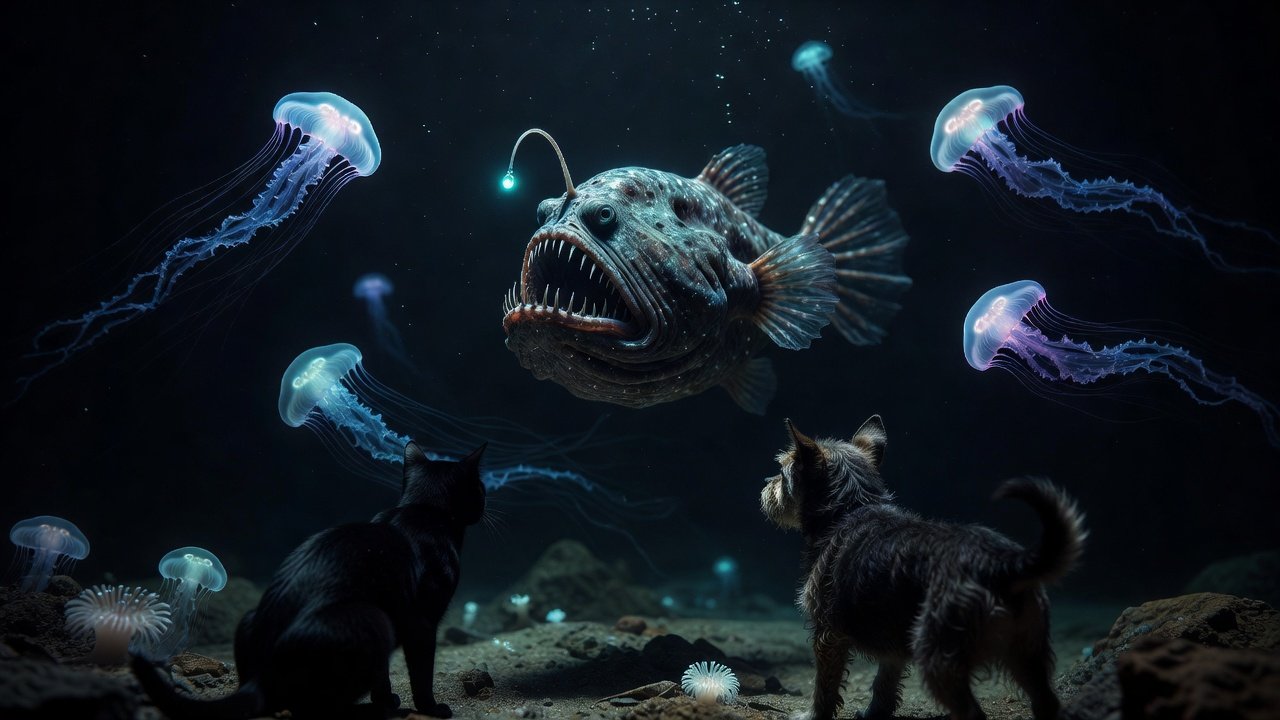
Weirdest Animals on Earth: Deep-Sea Oddities, Underground Societies & Evolutionary Marvels
Deep-Sea Oddities: Adaptations That Defy the Depths
While many of us are familiar with the quirky creatures that inhabit our backyards or local zoos, the ocean holds some of the planet’s most bizarre residents. These deep-sea dwellers have evolved extraordinary traits to survive in environments where light, pressure, and food are scarce. From gelatinous bodies to bioluminescent defenses, their adaptations showcase nature’s ingenuity in extreme conditions.

The blobfish, often voted one of the world’s ugliest animals when brought to the surface, looks completely different in its natural habitat thousands of feet below. At those crushing depths, its body maintains a more structured form thanks to its low-density flesh. National Geographic has highlighted how rapid pressure changes during trawling distort its appearance, leading to its unfortunate reputation. Conservation efforts focus on reducing deep-sea fishing impacts on these unique ecosystems.
Another marvel is the vampire squid, which inhabits the oxygen-minimum zones of the ocean. Despite its name, it doesn’t drink blood but deploys a cloud of bioluminescent mucus to confuse predators. Its webbed arms can envelop its body like a cloak. According to researchers at the Monterey Bay Aquarium Research Institute (often featured in Smithsonian reports), these creatures have one of the lowest metabolic rates among cephalopods, allowing them to thrive where oxygen is limited.
More Deep-Sea Wonders
- Goblin Shark: Known as a “living fossil,” this shark can extend its jaw dramatically to capture prey. Its pinkish skin and long snout make it look otherworldly. The Smithsonian Institution notes that little is known about their reproduction due to their deep habitat.
- Dumbo Octopus: Named after the Disney elephant for its ear-like fins, these small octopuses “fly” through the water at depths up to 7,000 meters. They are among the deepest-living octopuses.
Underground Societies: The Naked Mole Rat
One of the most extraordinary mammals is the naked mole rat. These nearly hairless, wrinkly rodents live in large underground colonies in East Africa with a social structure resembling that of insects — a single queen and workers. They feel little pain from acid or capsaicin, rarely get cancer, and can survive long periods without oxygen by switching to anaerobic metabolism.
The Smithsonian’s National Zoo and Conservation Biology Institute has studied these creatures extensively for insights into longevity and disease resistance. Their eusocial behavior, where most individuals never reproduce, is rare among mammals and provides fascinating parallels to bee and ant colonies. As a pet lifestyle writer with experience in rescue, I find their cooperative nature reminiscent of how multi-pet households learn to function together despite individual quirks.
Unique Primates and Foragers: The Aye-Aye
The aye-aye, a nocturnal lemur from Madagascar, uses a specialized middle finger to tap on trees and listen for insect larvae inside — a behavior called percussive foraging. With large ears, big eyes, and a bushy tail, it was once considered a bad omen by locals but is now recognized for its important ecological role in controlling wood-boring insects.
According to the World Wildlife Fund (WWF), habitat loss is the primary threat to this species. Conservation programs work with local communities to change perceptions and protect the forests where aye-ayes thrive. Their unique anatomy, including continuously growing teeth and a long, thin finger, makes them one of the most specialized primates on Earth.
Amphibian Marvels: The Axolotl and Beyond
The axolotl remains in its larval form throughout life, retaining feathery external gills and an aquatic lifestyle. Its unparalleled ability to regenerate limbs, spinal cord, and even parts of its heart and brain without scarring has made it a star in scientific research. The AZA and various breeding programs help maintain genetic diversity for this critically endangered species from Mexico.
Other amphibians like the glass frog have translucent skin that reveals their internal organs, providing a window into their physiology. These traits highlight how evolution has produced solutions to survival challenges in diverse habitats.
Monotremes: The Platypus Puzzle
The platypus is one of only five monotremes — mammals that lay eggs. Males have venomous spurs, and both sexes have electroreceptors in their bills for detecting prey in murky waters. When European scientists first examined specimens, they believed it was a hoax stitched together from different animals.
WWF and Australian conservation groups monitor platypus populations, which face threats from habitat degradation. Their unique combination of reptilian and mammalian traits makes them key to understanding mammalian evolution.
Why Weird Animals Matter for Conservation and Appreciation
These bizarre creatures remind us that “normal” is relative in the natural world. By studying and protecting them, we gain insights that benefit both wildlife and human medicine. Zoos accredited by the AZA play a crucial role in breeding programs and public education about these species.
As pet lovers, learning about these animals fosters greater empathy for all creatures, including the “unusual” pets that end up in rescues. Supporting organizations like the Smithsonian, National Geographic, and WWF helps ensure these weird and wonderful animals continue to surprise and inspire future generations.
Sources
- Smithsonian Magazine – Articles on Naked Mole Rats and Deep-Sea Life
- National Geographic – Blobfish and Marine Oddities
- World Wildlife Fund (WWF) – Aye-Aye and Platypus Conservation
- Association of Zoos and Aquariums (AZA) – Breeding Programs for Axolotls and Others
- Smithsonian’s National Zoo – Research on Unusual Species
Related Posts
- The Most Weird Animals on Earth: Bizarre Creatures You Won’t Believe Are Real
- 25 Cute Animals That Will Make Your Heart Melt: Facts & Photos
- Are Spiders Animals? What Every Pet Owner Should Know
- Zoo Animals: Fascinating Facts and Care Tips
- Baby Animals