
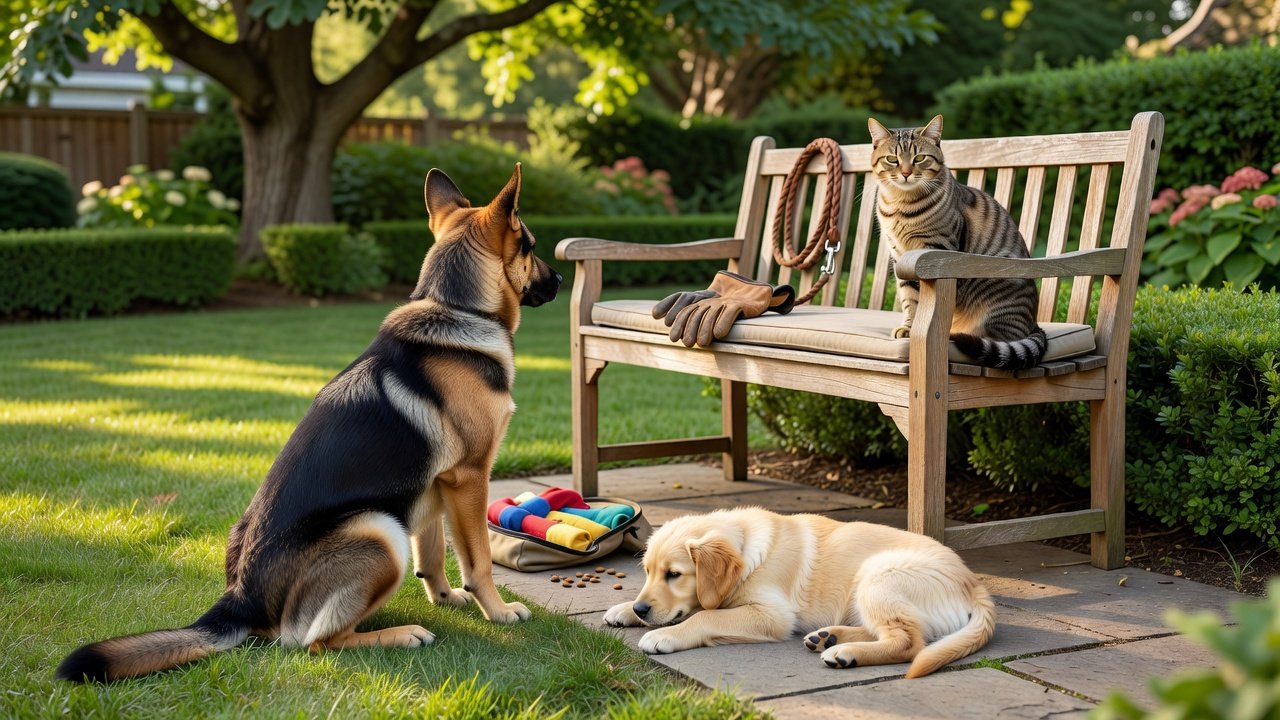
Training Techniques to Curb Aggressive Dog Behavior
“`html

Aggressive dog behavior remains one of the most frequent reasons owners seek help, and in my years as a vet tech I’ve seen this situation countless times where early missteps turn manageable issues into crises. From a clinical standpoint, what owners miss here is that growling, snapping, or lunging rarely appears in isolation; it usually traces back to fear, territorial drive, or unresolved trauma layered on top of genetics and incomplete socialization. Certain working breeds such as German Shepherds, Rottweilers, and Pit Bull Terriers carry stronger protective instincts shaped by historical function, while smaller dogs like Chihuahuas or Jack Russells often escalate from fear or resource guarding. Identifying the precise trigger is always the first clinical step before any training plan begins. Medical differentials must be ruled out immediately—pain from arthritis or dental disease can produce identical body-language changes, and I’ve watched countless cases resolve once the underlying discomfort was treated. Body-language signals such as raised hackles, rigid posture, or whale-eye give reliable early warning if you know what to watch for, especially in multi-pet homes where sudden cat movements can set off an otherwise stable dog.
Understanding the root cause of aggression is essential before implementing any training protocol. Fear-based aggression, which accounts for the majority of cases, manifests when a dog feels cornered or threatened and sees aggression as a defensive survival strategy. Territorial aggression emerges when dogs perceive their space—whether home, yard, or car—as requiring protection. Resource guarding develops when dogs learn that the presence of other animals or people near food, toys, or valued items triggers conflict. Frustration-related aggression appears in highly energetic dogs confined without adequate outlets, while pain-related aggression is a medical red flag requiring immediate veterinary intervention. Redirected aggression occurs when a dog cannot reach the actual trigger and instead snaps at an innocent bystander. Recognizing which category applies to your dog allows for precision targeting of the intervention rather than generic approaches that may worsen the problem.
Positive reinforcement sits at the core of every evidence-based protocol I recommend. High-value treats, calm verbal markers, and brief toy rewards build new associations faster than any correction-based method. When a Border Collie starts to tense around other dogs, marking the exact second of relaxed posture and delivering an immediate reward prevents rehearsal of the aggressive sequence. Consistency across every household member is non-negotiable; mixed signals only increase anxiety. Daily obedience work with “sit,” “stay,” and “leave it” establishes predictable structure without invoking dominance hierarchies that can backfire. Aversive tools such as shock collars have been shown in multiple studies to heighten fear-based aggression, so I steer clients away from them entirely. Short, five-to-ten-minute sessions repeated throughout the day keep engagement high and frustration low, particularly for high-drive breeds that also need mental outlets like puzzle feeders or scent games.
The concept of “threshold distance” becomes critical in practical application. This represents the minimum distance between your dog and the trigger at which your dog notices but remains calm enough to learn. For a dog reactive to other dogs on walks, threshold distance might be 50 feet initially. By keeping sessions at this distance and rewarding calm behavior, you build positive associations without overwhelming the nervous system. Over weeks of consistent practice, you gradually decrease this distance—but only when the dog demonstrates relaxed responses at the current distance. Rushing this process by closing distance too quickly causes regression and actually strengthens the aggressive response through repeated practice of the undesired behavior. Patience at this stage determines long-term success more than any other single factor.
Desensitization combined with counter-conditioning remains the most reliable way to lower reactivity thresholds. The process begins with the trigger presented at a distance that elicits no more than mild alertness, then pairs that exposure with food or play so the emotional valence shifts. Over successive weeks the distance is closed only after the dog consistently offers relaxed responses. This same graded-exposure logic applies when introducing dogs to resident cats; secure baby gates and escape routes for the cats reduce overall household tension while the dog is reinforced for calm disengagement. When progress plateaus, referral to a veterinary behaviorist or certified positive-reinforcement trainer is the next evidence-based move. In severe anxiety cases, short-term medication under veterinary supervision can lower the emotional floor enough for learning to occur. Environmental controls—solid fencing, properly fitted leashes, and routine exercise matched to breed needs—prevent practice of unwanted responses. Life transitions such as moves or new household members warrant extra monitoring because they reliably spike stress hormones and can undo prior gains.
Management strategies deserve equal emphasis alongside training because they prevent the dog from practicing aggressive responses while learning new ones. A dog that practices lunging at the mailman dozens of times daily is rehearsing and strengthening that behavior pattern. By arranging for the mailman to deliver to a side entrance, securing the dog in a separate room during delivery times, or using opaque window coverings to prevent visual triggers, you eliminate practice opportunities. This isn’t avoidance in a negative sense; it’s strategic prevention that accelerates learning of replacement behaviors. Similarly, dogs with food aggression should be fed separately or supervised closely, with puzzle feeders replacing free-feeding that can trigger guarding. Crate training, when introduced positively, provides a safe space where the dog can decompress rather than remaining in a heightened state all day.
Exercise and enrichment form the foundation that allows all other training to succeed. A chronically under-exercised dog exists in a baseline state of elevated arousal, making threshold distances shorter and reactivity more intense. For high-drive breeds like Australian Shepherds, Border Collies, or Huskies, one daily walk is insufficient; these dogs need 60-90 minutes of varied activity including aerobic work, mental stimulation, and skill practice. Sniff walks where the dog controls pace and direction provide enormous stress relief. Scent games, hide-and-seek with toys, and training sessions that engage problem-solving fatigue the brain more effectively than repetitive fetch. A tired dog is exponentially more trainable and far less prone to reactive episodes. Owners often spend thousands on trainers while their dog remains under-exercised; addressing this foundational need frequently produces dramatic improvements independent of formal training.
Data from multiple sources align with what I see in practice: roughly 4.5 million dog bites occur each year in the United States, many preventable through timely intervention. Positive-reinforcement protocols have been associated with up to 90 percent reductions in aggressive incidents compared with punishment-based approaches. Pit Bulls and German Shepherds appear disproportionately in bite statistics largely because of inadequate socialization rather than breed destiny. More than 70 percent of aggression cases carry an underlying medical component, underscoring the necessity of a full physical exam before behavior work begins. Households that implement structured training between dogs and cats report measurably fewer conflicts, and professional guidance improves outcomes in approximately 85 percent of serious cases. Research consistently shows that early intervention—addressing aggression in puppies or during first months of ownership—costs far less in veterinary behaviorist fees than waiting until the behavior becomes entrenched and dangerous.
The role of socialization in prevention cannot be overstated. Dogs socialized to diverse people, environments, sounds, and animals between 3 and 16 weeks of age develop fundamentally different threat-assessment systems than under-socialized dogs. Critical period socialization isn’t about making puppies love everything; it’s about teaching them that novel stimuli are normal and non-threatening. Puppies exposed to various human appearances, gentle handling, different environments, and other animals learn that variation is safe. Later in life, when their adult threat-detection system activates, they have a library of positive experiences to reference. Rescue dogs without this early exposure often require longer desensitization timelines, but improvement remains achievable with proper protocols.
Targeted, consistent application of these methods converts reactive dogs into reliable companions. Regular veterinary checks keep medical factors from derailing progress, and strategies must be adjusted to the individual dog’s history, energy level, and living situation. With patience and the right clinical framework, even long-standing aggression patterns can be reshaped into calmer, safer responses that benefit both the animal and the household.
Sources
- American Kennel Club (AKC) – Dog Training Resources – Official AKC guides on training techniques and behavioral modification
- Training Tips for Aggressive Behavior in Dogs
- Training Your Dog to Walk Calmly Leash
- Training Your Dog to Walk Calmly on Leash
- Top Training Commands Every Dog Should Know
- German Shepherd Training Tips for Positive Behavior