
The Ultimate Persian Cat Grooming Guide for Happy, Healthy Kitties
“`html
There’s something truly special about welcoming a Persian into your home, especially when that silky-coated beauty arrives through rescue channels like so many do after their previous families underestimate the commitment their fur demands. My rescue cats have taught me that grooming isn’t a chore—it’s a quiet conversation, a way of saying “I’m here for you” that builds trust over time. What every pet owner who’s adopted knows is that these moments deepen the bond in ways nothing else can, turning a once-neglected kitty into a confident companion who trusts you with their most vulnerable spots.
Persians carry that signature dense double coat of soft undercoat and longer guard hairs, which grows nonstop and traps dirt and oils far more readily than shorter coats. Without steady care, mats form quickly, pulling at skin and sometimes hiding infections underneath. Seasonal shedding hits them hard too, so adjusting your routine during those shifts keeps everyone comfortable. Spotting trouble early means watching for extra scratching, knots around the belly or ears, and fur that loses its shine—signs that it’s time to step up before discomfort sets in and changes your cat’s mood.
Understanding the structure of your Persian’s coat helps you groom more effectively. The guard hairs—those longer, stiffer strands on top—protect the delicate undercoat beneath. When mats form, they typically develop in the undercoat first, which is why brushing through to the skin matters so much. Many new Persian owners are surprised to learn just how much coat is hiding beneath the surface. Running your fingers through the fur and feeling resistance indicates matting has already begun, even if it’s not visible from above. This early warning system saves countless hours of detangling later.
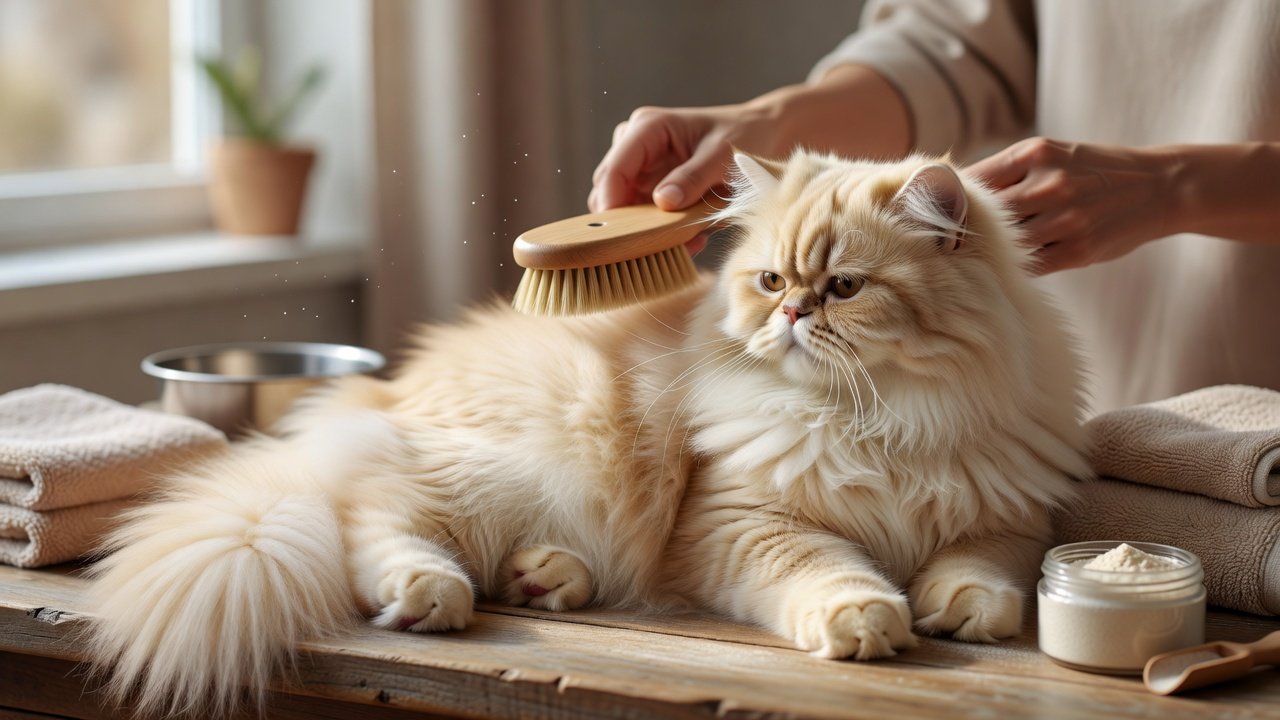
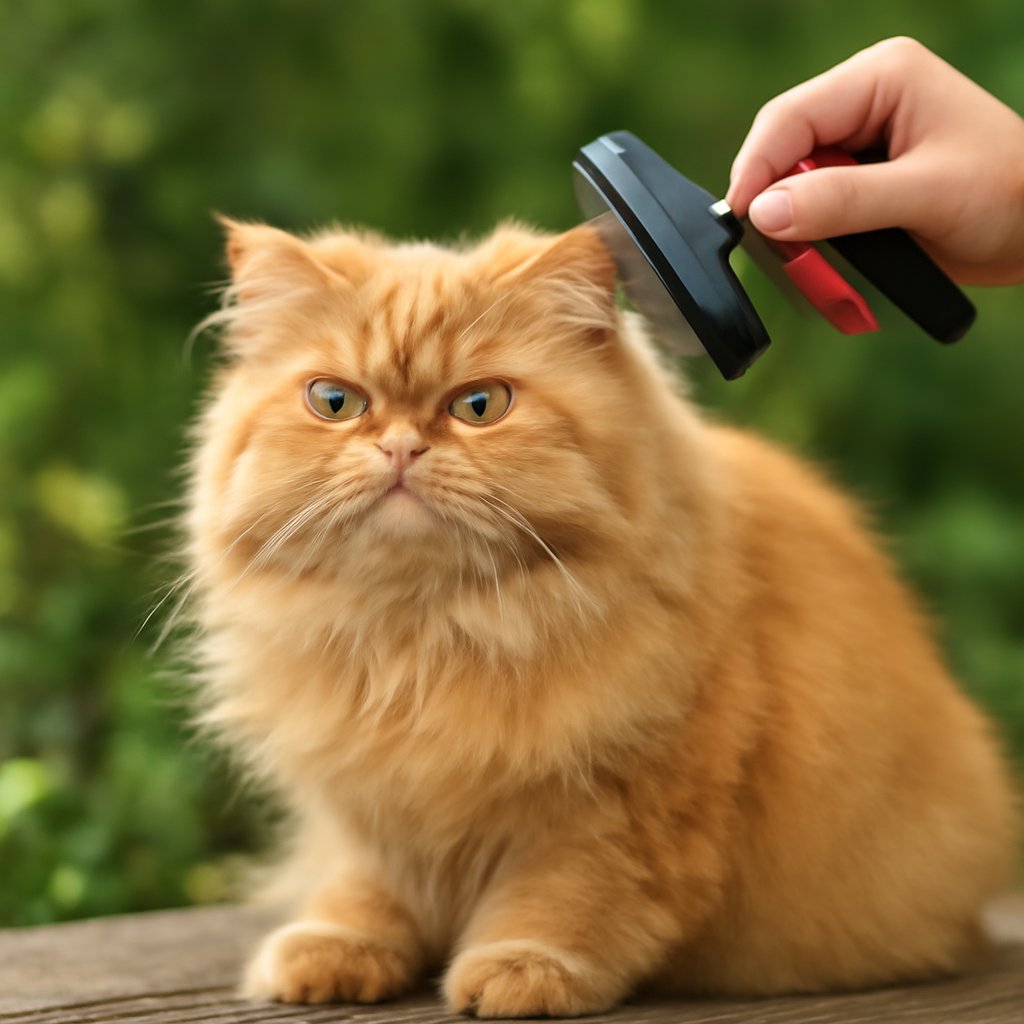
Building a daily brushing habit makes all the difference. A short session each day with a stainless steel comb—wide teeth first, then narrow—starting at the neck and working down, prevents knots from ever forming. I like to chat softly while I work, the same way I did with my own trio when they first came home wary from their shelter days. Focus on the spots that rub most: armpits, belly, and the base of the tail. Follow with a slicker brush to lift loose hair, keep each round to ten or fifteen minutes, and always end with a treat so the experience stays positive. On the rare occasion a mat won’t budge, careful snips with blunt scissors are safest, but only as a last resort.
The tools you choose matter significantly. Invest in quality grooming equipment rather than budget alternatives—a good stainless steel comb won’t snag or pull unnecessarily, making the experience gentler for your cat. Metal combs also last longer and work better on long, thick coats than plastic alternatives. A metal slicker brush with fine, short wires close together works beautifully for Persians, though it requires a gentle touch to avoid irritating sensitive skin. Some owners also swear by undercoat rakes during heavy shedding seasons; these tools remove loose undercoat without damaging the guard hairs. Keep your tools clean by wiping them weekly with a damp cloth and storing them in a dry place to prevent rust.
Bathing comes around every four to six weeks, not weekly like some dogs. A cat-formulated shampoo for long coats, warm water tested on your wrist, and thorough rinsing keep residue from irritating skin. Pat dry first, then a cool blow-dryer setting paired with gentle brushing stops new tangles from setting in. Many of us with thick-coated rescues find that a professional groomer visit every couple of months offers extra peace of mind. When bathing at home, consider using a non-slip mat in the tub or sink to help your Persian feel secure. Some owners prefer to bathe their cats in a bathtub with just a few inches of water rather than running water, which many cats find less stressful. Pre-brushing before the bath removes mats and loose fur, making the water rinse more effective and the drying process faster.
The frequency of bathing truly depends on your individual cat’s lifestyle and coat condition. Indoor Persians may need bathing less frequently than outdoor or semi-outdoor cats, while show-quality Persians often bathe weekly to maintain their coat’s appearance. If you notice your Persian’s coat looking dull or feeling greasy, it’s time for a bath. Conversely, bathing too frequently can strip natural oils, so finding the right schedule for your cat prevents both matting and skin dryness. Keep bath time brief—typically five to ten minutes of actual washing time—to reduce stress for both you and your feline friend.
Don’t forget the little extras that complete the picture. Nail trims every two weeks, careful ear cleaning once a month with vet-approved solution, and daily gentle wiping around those expressive eyes to manage tear stains all add up. These small rituals often reveal health changes before they become bigger issues. Persian cats are prone to epiphora, excessive tearing that stains the fur beneath their eyes. Using a soft, damp cloth or specifically designed tear stain remover daily prevents buildup and keeps that gorgeous face looking its best. Some owners find that slightly adjusting their cat’s diet or ensuring proper hydration can actually reduce tear staining naturally.
Ear care deserves particular attention with Persians, whose ear structure and heavy coat make them prone to ear infections. Monthly cleaning with a vet-approved ear cleaner prevents wax and debris from accumulating. Never insert anything deep into the ear canal—stick to cleaning the visible outer ear and flap. If you notice a foul smell, excessive discharge, or your cat scratching constantly at their ears, contact your vet promptly as these signs indicate infection requiring professional treatment.
Nail care is surprisingly important for coat health. When nails grow too long, cats change their gait and posture to accommodate discomfort, which affects how they groom themselves and can lead to additional matting. Trimming every two weeks with proper cat nail clippers keeps them at a comfortable length. The pink quick is visible in light-colored nails, so trim just before it appears. If your Persian has dark nails where the quick isn’t visible, trim conservatively and frequently rather than risking cutting too short. Many cats are less stressed by frequent, small trims than by letting nails grow long between infrequent cuts.
Dental hygiene often gets overlooked in grooming discussions, but it’s vital for overall health. Persians are prone to dental disease, so daily teeth brushing with cat-formulated toothpaste helps prevent tartar buildup and gum disease. This doesn’t require elaborate sessions—even thirty seconds of gentle brushing daily makes a difference. If your cat won’t tolerate brushing, ask your vet about dental treats or water additives that support oral health.
Sometimes home care needs backup. Severe matting or sudden reluctance to be touched calls for a groomer experienced with long-haired breeds or a vet check to rule out underlying problems. Never attempt to remove severe matting at home, as the pulling can cause pain and skin damage. Professional groomers have specialized tools and experience that make the process safer and more comfortable. If your Persian suddenly resists grooming when they previously tolerated it well, this behavioral change warrants a veterinary visit to rule out pain, illness, or skin conditions causing discomfort.
Creating a grooming station at home makes the process easier for both of you. A dedicated area with good lighting, all tools within reach, and a non-slip surface reduces stress and ensures you’re not searching for supplies mid-session. Some cats respond better to grooming after play or meal times when they’re relaxed. Experiment with different times of day to find when your Persian is most cooperative. The key is consistency—cats are creatures of habit, and a predictable grooming routine becomes part of their daily comfort rather than an unexpected disruption.
With that mix of steady at-home attention and occasional expert support, your Persian gets to enjoy the healthy, flowing coat they were born with—while the two of you keep growing closer, one rescued brush stroke at a time.
Sources
- American Kennel Club (AKC) – Breed information and grooming standards
- ASPCA – Comprehensive cat care and health guidelines
- History and Traits of the Persian Cat Breed
- How to Meet Your Siberian Husky’”s Exercise Needs for a Happy, Healthy Life
- Baby Animals: The Ultimate Guide to Adorable Babies in the Wild and at Home
- Preventive Care Tips for Keeping Cats Healthy
- How to Manage Multi-Cat Household Dynamics Peacefully
Related Posts