
How to Manage Multi-Cat Household Dynamics Peacefully

Managing multi-cat household dynamics peacefully starts with recognizing that cats are naturally solitary hunters who can learn to coexist when their environment meets their individual needs. In a multi-cat household, tension often arises from competition over resources, territory, or attention, but proactive strategies help create harmony and reduce stress-related behaviors like fighting, inappropriate elimination, or excessive hiding. From a clinical standpoint, what owners miss here is how quickly subtle resource shortfalls turn into chronic stress markers that show up on bloodwork or during routine exams.
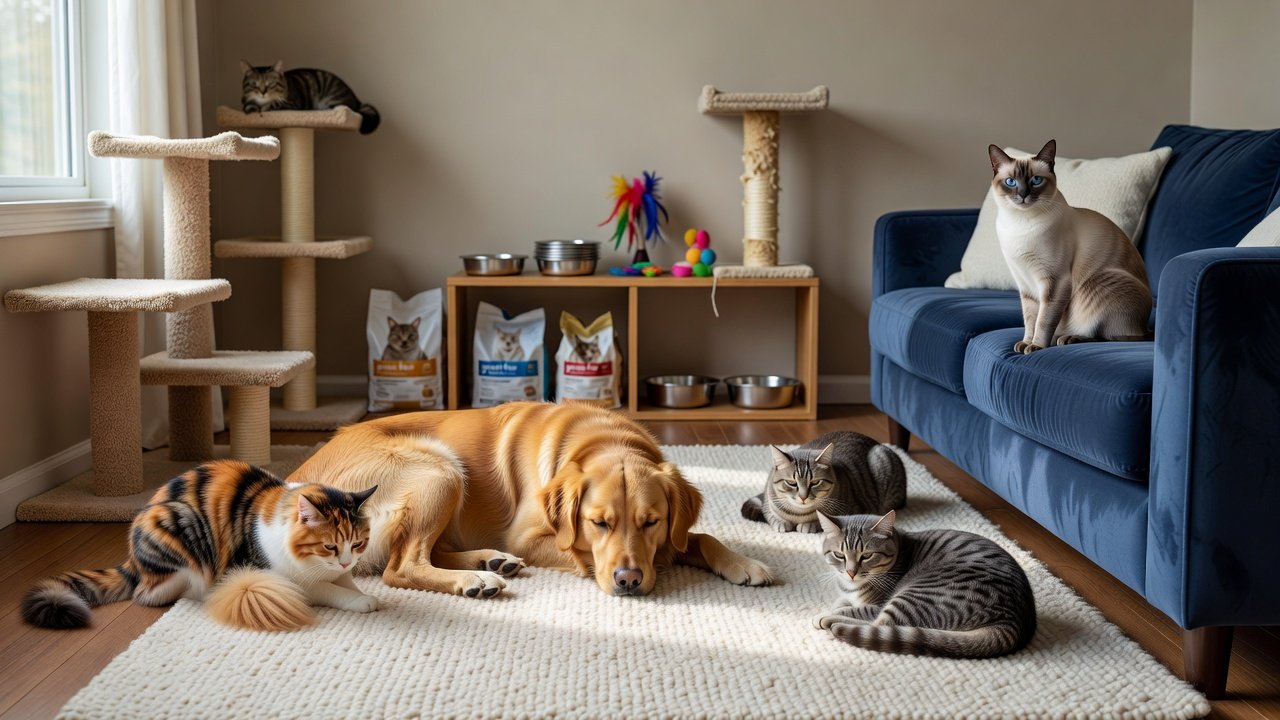
In my years as a vet tech, I’ve seen this situation countless times where cats who seemed fine at first glance were actually navigating a minefield of shared spaces. Cats do not form tight social packs like dogs, so multi-cat household dynamics depend on each cat’s personality, early socialization, and available space. Some cats tolerate others well while others prefer solitude, leading to subtle or overt conflicts. Observe body language such as flattened ears, swishing tails, or staring matches to identify tension before it escalates. Providing vertical territory like cat trees, wall shelves, and window perches allows cats to claim separate spaces and avoid direct confrontation.
Stress in multi-cat homes often manifests as over-grooming, appetite changes, or increased vocalization. Introducing pheromone diffusers like Feliway can calm nerves by mimicking natural facial pheromones. Regular play sessions with interactive toys redirect energy and build positive associations between cats when supervised at a distance. From a training methodology angle, consistent timing and positive reinforcement here mirror the desensitization protocols we use for reactive dogs, only adapted to feline thresholds.
Before expanding a multi-cat household, consider age, energy level, and temperament. Pairing a young playful cat with a senior may overwhelm the older resident, while two confident adults often establish boundaries faster. Slow introductions over weeks using scent swapping and visual barriers prevent immediate clashes. I’ve watched rushed pairings lead to months of redirected aggression that could have been avoided with a more methodical approach.
Resource guarding is a primary trigger in multi-cat household dynamics. Follow the “one per cat plus one” rule for litter boxes, food stations, water bowls, and resting spots. Place these items in separate locations so no cat must cross another’s path to access them. Multiple litter boxes should be uncovered, large enough, and scooped daily to encourage consistent use. In my experience as a vet tech, this single adjustment resolves more litter box issues than any medication protocol.
Feed cats in different rooms or use puzzle feeders and timed automatic bowls to reduce mealtime stress. High-value treats given during group training sessions can create positive group experiences when cats remain calm. Monitor each cat’s weight and adjust portions individually since some cats may overeat when stressed. Rotating toys weekly and scheduling solo playtime with each cat meets individual needs without forcing interaction. Window bird feeders and cat-safe plants provide mental stimulation that cuts down on boredom-driven chasing.
Annual veterinary exams for every cat in the household catch underlying issues like urinary tract problems or arthritis that can worsen social tension. When adding a new cat, use the three-step introduction method: scent familiarization, supervised visual contact, and gradual physical access. Keep the newcomer in a separate room initially with its own litter box and food. If fights occur, separate cats immediately and reintroduce slowly while addressing triggers such as blocked sightlines or insufficient hiding spots. Consult a certified feline behaviorist for severe cases. Medications or calming supplements may be prescribed short-term under veterinary guidance to facilitate reintroduction.
Establish daily routines for cleaning shared spaces and rotating enrichment items. Track litter box usage with journals or apps to spot changes quickly. Neutering or spaying all cats reduces hormone-driven territorial disputes and supports stable multi-cat household dynamics over time.
Studies show that households with three or more cats experience 40% higher rates of inter-cat aggression when resources are not duplicated adequately. Providing one litter box per cat plus one extra reduces litter box avoidance by up to 75% according to veterinary behavior surveys. Vertical space increases can lower stress hormone levels in multi-cat homes by 30-50% within the first month of installation. Proper introductions lasting four to six weeks result in successful integration 85% of the time versus rushed introductions that often fail. Over 60% of behavior complaints in multi-cat households involve resource guarding rather than true personality clashes.
Successfully managing multi-cat household dynamics peacefully combines environmental enrichment, consistent resource availability, and patient observation. By respecting each cat’s need for personal space while fostering positive shared experiences, owners create a stable home where every feline thrives. Regular veterinary care, gradual introductions, and proactive conflict resolution ensure long-term harmony and prevent common pitfalls that lead to rehoming or chronic stress. With thoughtful planning, a multi-cat household becomes a source of companionship rather than constant tension.