
How to Groom a Long-Haired Cat Without Stress
“`html
Long-haired cats like Persians, Maine Coons, and Ragdolls bring plenty of elegance to a household, but those dense coats require steady attention to avoid mats that lead to skin infections or painful pressure sores. From a clinical standpoint, what owners miss here is how quickly an untreated tangle can restrict movement and trigger secondary bacterial issues, which is why consistent grooming turns into both preventive care and a trust-building exercise rather than a weekly battle.
In my years as a vet tech, I’ve seen this situation countless times with cats whose owners waited until matting became severe before seeking help. Creating a predictable space helps right from the start. Pick a quiet room with even lighting and a non-slip surface on a table or your lap. Have every tool ready so the cat is never left alone mid-process. Introduce brushes and combs gradually by leaving them near resting spots with treats nearby, letting positive associations build through repeated exposure rather than sudden confrontation.
Desensitization follows the same behavioral principles we use in training protocols. Start with brief hand strokes that imitate brushing, then advance to light brush contact for just ten seconds paired with high-value rewards. Extend time in small increments only while the cat stays relaxed. If stress signals appear, end the session early to preserve progress instead of pushing through.
Understanding what constitutes stress signals in cats is essential for success. Watch for ear flattening, tail twitching, skin rippling along the back, dilated pupils, or attempts to move away. Some cats will vocalize their discomfort through meows or growls, while others freeze in place—both are signs to pause. Learning to read your individual cat’s body language prevents escalation and keeps grooming sessions positive. Cats with a history of trauma or extreme sensitivity may benefit from calming supplements like L-theanine or pheromone diffusers in the grooming area, though always consult your veterinarian before introducing any supplements.
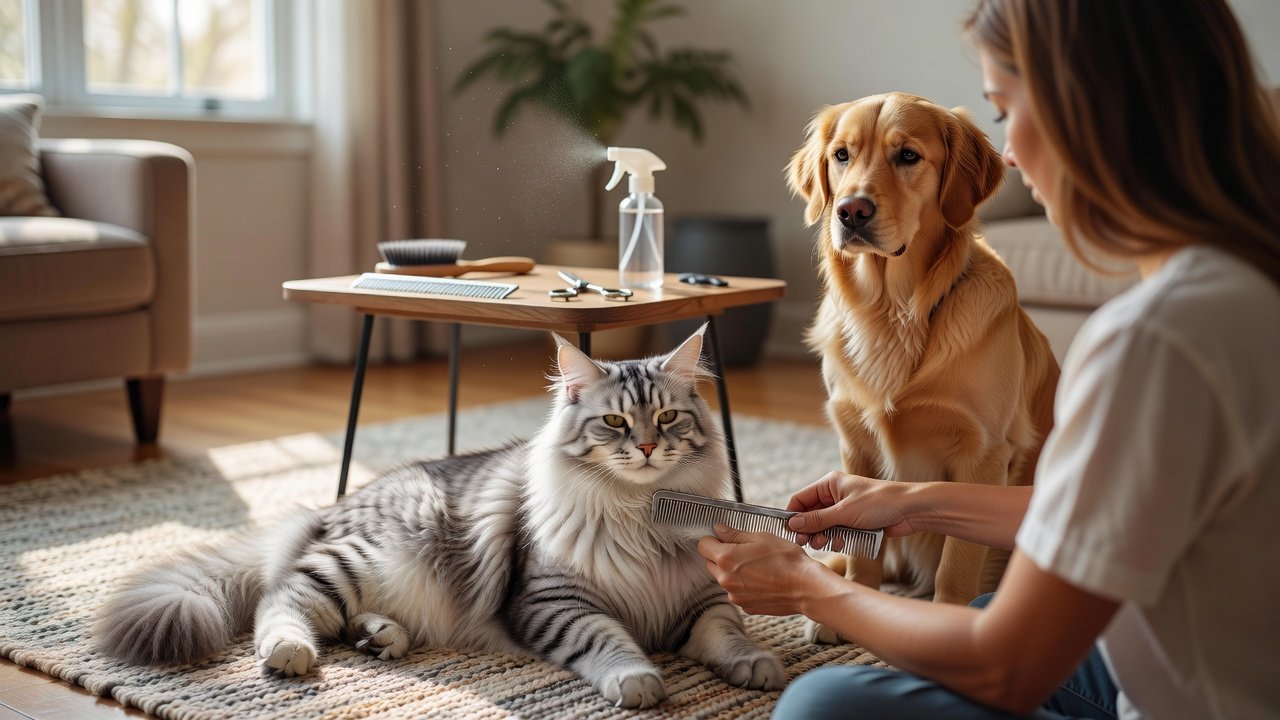
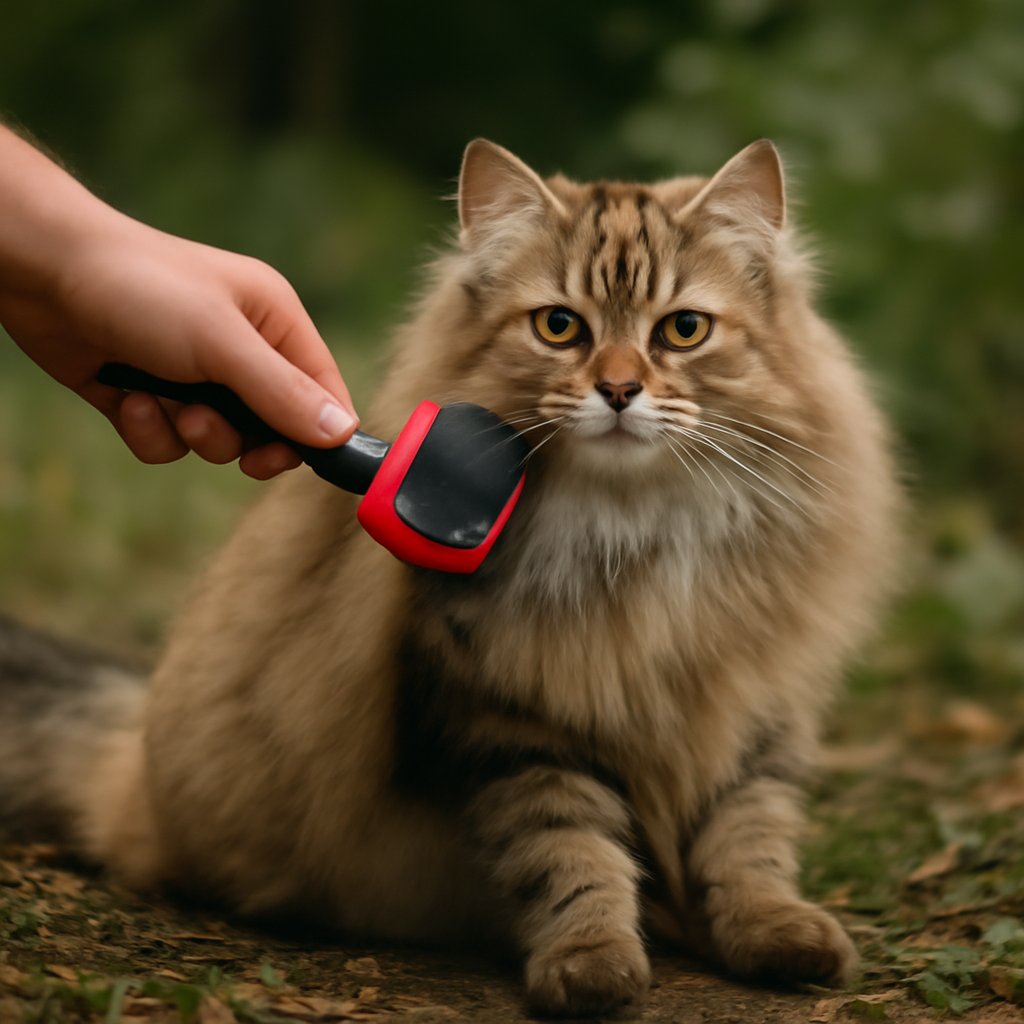
The right equipment supports both coat integrity and skin health. A stainless-steel slicker with rounded pins reaches the undercoat without abrasion, while a wide-tooth metal comb handles detangling and a soft-bristle brush finishes by redistributing oils. Cat-safe detangling sprays and cornstarch powder help loosen mats without harsh chemicals. Nail clippers sized for felines and styptic powder stand ready for quick corrections if a nail quick is touched. A rubber-nub grooming glove offers an alternative for cats that resist standard brushes. Clean tools after every use to limit bacterial transfer, and replace slicker pins the moment they bend or dull.
When selecting grooming tools, investment in quality matters significantly. Cheap brushes with irregular pin spacing can pull hair and irritate skin, while professional-grade tools glide through coats smoothly. Many veterinary clinics sell recommended brands that are proven safe and effective. If you’re unsure which tools suit your cat’s coat type, ask your veterinarian or a certified feline groomer for personalized recommendations based on your cat’s specific breed characteristics and coat density.
Work in sections from neck to tail, using short strokes that follow hair growth and watching closely for changes in posture or tail movement. On a mat, apply a measured amount of detangler, pause thirty seconds, then separate gently with fingers before combing. Sensitive zones such as the belly, armpits, and ears need extra care: lift fur rather than tug, limit each area to about five minutes, and reward immediately. If agitation shows, pause and resume later. End every session with a soft-bristle pass and a quick skin check for redness or external parasites.
A practical tip many owners overlook is the importance of timing. Cats tend to be more cooperative when they’re naturally relaxed, such as after eating or during their quieter afternoon hours. Avoid grooming sessions right after playtime when cats are energized and excitable. Similarly, never attempt grooming if your cat is stressed from a veterinary visit or environmental changes. Patience with timing prevents unnecessary conflict and builds positive associations over time.
For cats with severe matting that cannot be safely detangled at home, professional groomers who specialize in feline care offer sedation-free options and expertise in removing mats without damaging skin. Some mats are so close to the skin that attempting home removal risks cutting skin or causing injury. Recognizing when professional help is needed protects your cat’s welfare and prevents complications. Many insurance policies for cats now cover professional grooming as a preventive care benefit, making professional intervention more accessible.
During heavy seasonal shedding, increase frequency to every other day to stay ahead of undercoat buildup. Elderly or arthritic cats often tolerate shorter daily lap sessions better than longer weekly ones. Human hair products stay off-limits because many contain ingredients toxic to cats.
Nutritional factors also play an underrated role in coat quality. Cats fed high-quality diets rich in omega-3 and omega-6 fatty acids develop healthier, more manageable coats that mat less frequently. Consult your veterinarian about whether your cat’s current diet optimizes skin and coat health. Some cats benefit from fish oil supplements specifically formulated for felines, which can reduce matting by improving overall coat resilience and reducing excessive shedding.
Long-haired cats require brushing 3–5 times per week to prevent mats that can lead to skin infections. Regular grooming can reduce household hairballs by up to 70 percent in breeds like the Persian. Desensitization training typically takes 2–4 weeks before most cats accept full grooming sessions calmly. Matted fur left untreated can restrict movement and cause painful pressure sores within weeks. Professional groomers report that 60 percent of long-haired cat clients show reduced anxiety after owners implement at-home desensitization. Daily gentle brushing sessions of 5–10 minutes strengthen the human-cat bond more effectively than infrequent longer sessions.
Beyond the immediate benefits of mat prevention and reduced shedding, regular grooming creates opportunities for early detection of skin conditions, lumps, parasites, or other health concerns. Running your hands through your cat’s coat during grooming sessions lets you identify changes that might otherwise go unnoticed. This early warning system has prevented serious health issues in countless cats whose owners catch problems during routine grooming rather than waiting for visible symptoms.
Creating a grooming schedule that fits your household routine increases consistency. Many owners find success with a Monday, Wednesday, Friday pattern, which spreads sessions throughout the week and prevents mat buildup without requiring daily commitment. Post a simple chart or set phone reminders to establish the habit. Consistency matters more than perfection—even shorter sessions performed regularly outperform sporadic longer attempts.
Over time, these steps shift grooming from a source of anxiety into a reliable routine that supports skin health, cuts down on shedding, and reinforces the bond between cat and owner.
Sources
“`